(seafoo.vasep.com.vn) Ca Mau Province is stepping up efforts to protect aquatic resources and promote transparent and sustainable fisheries, joining the country’s efforts to have the European Commission (EC) remove its “yellow card” warning for illegal, unreported and unregulated (IUU) fishing.
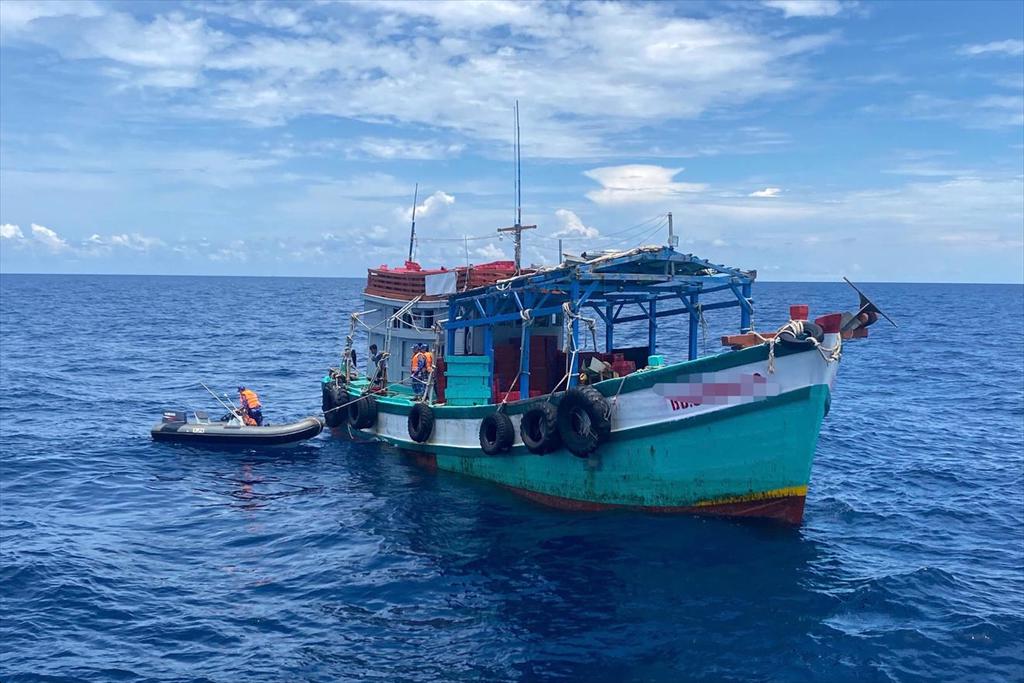
Ca Mau considers fishing vessel management and IUU prevention not merely the responsibility of the agricultural sector or law enforcement agencies, but a shared responsibility of the entire political system and every fisher. The province has therefore implemented comprehensive measures to protect aquatic resources and build a transparent and sustainable fisheries sector.
Tightening fishing vessel management from shore
Ca Mau has promptly issued directives to implement IUU fishing prevention measures in line with instructions from the Prime Minister and central ministries and agencies.
Implementation plans follow the principle of “six clear” requirements, with responsibilities clearly assigned to individuals and agencies. Leaders of departments and local authorities are expected to take direct responsibility for addressing outstanding issues and fulfilling assigned tasks.
The province has strengthened its IUU Steering Committee and inter-agency working group and issued working regulations. An inter-agency team has also been established to inspect and monitor fishing vessels entering and leaving ports, check fishing records and documents, and verify the traceability of seafood products.
A key focus is monitoring vessels entering and leaving ports, cross-checking vessel data with border guard authorities, inspecting privately operated fishing ports, and strengthening coordination among border guards, fishing ports, local authorities and the IUU Office, particularly in monitoring the volume of seafood landed at ports.
Ca Mau currently has three Category II fishing ports—Song Doc, Rach Goc and Ganh Hao—designated to handle the confirmation and certification of seafood origin and vessels of 15 meters or more in length. Another Category III port, Cai Doi Vam, is qualified to receive vessels operating in offshore fishing grounds.
The province also maintains 14 border guard checkpoints and 16 mobile inspection posts at sea entrances without permanent border guard stations. These forces regularly monitor vessels and take action against those failing to meet requirements for going to sea or violating regulations.
At the grassroots level, coastal communities have introduced practical measures to prevent unqualified vessels from going to sea and raise fishermen’s awareness. Officials and Party members have been assigned to monitor fishing vessels, while local authorities have organized direct communication activities and mock trials on illegal and IUU fishing to strengthen compliance.
Digitalization as a breakthrough for traceability
The province considers fisheries data digitalization a breakthrough in improving the transparency and traceability of fishing activities. To date, 2,340 deregistered fishing vessels have been updated in databases in accordance with requirements from the Ministry of Agriculture and Environment.
Notably, 100% of Ca Mau’s fishing vessel data has been updated in the national fisheries database (Vnfishbase), the Vessel Monitoring System (VMS) and the national population database (VNeID). Data is regularly updated alongside vessel registration and inspection activities at fishing ports and sea entrances.
Ca Mau has also deployed the electronic catch documentation and traceability system (eCDT) at all fishing ports in the province. As a result, 100% of fishing vessels measuring 15 meters or more that engage in fishing activities use eCDT for port entry and departure procedures and electronic fishing logbooks.
The province recorded 1,883 vessel arrivals and 2,182 departures, with approximately 88,062 tonnes of seafood passing through its fishing ports.
These figures demonstrate Ca Mau’s commitment to digitalizing fisheries management and improving traceability throughout the entire seafood supply chain, supporting the country’s efforts to address the EC’s IUU “yellow card.”
Pham Van Muoi, Deputy Director of the Ca Mau Department of Agriculture and Environment, said the province will continue to implement comprehensive IUU prevention measures, strengthen enforcement against destructive fishing practices, increase communication and guidance for fishermen, and combine patrols and inspections with strict action against violations.
The provincial People’s Committee has also issued inter-agency coordination regulations for patrols, inspections and fishing vessel management, as well as origin-traceability documentation. The mechanism is designed to ensure timely coordination and handling of violations when they arise.
From tighter management at sea and stricter border control to closer monitoring by officials at coastal communes, Ca Mau is building a comprehensive system for fisheries management.
IUU fishing prevention is no longer solely the responsibility of the fisheries sector or law enforcement agencies. It has become a shared responsibility of the entire political system and every fisherman in Ca Mau.
This collective effort provides a solid foundation for restoring aquatic resources, helping Vietnam remove the EC’s “yellow card” and move toward a more transparent and sustainable fisheries sector.