A promising market
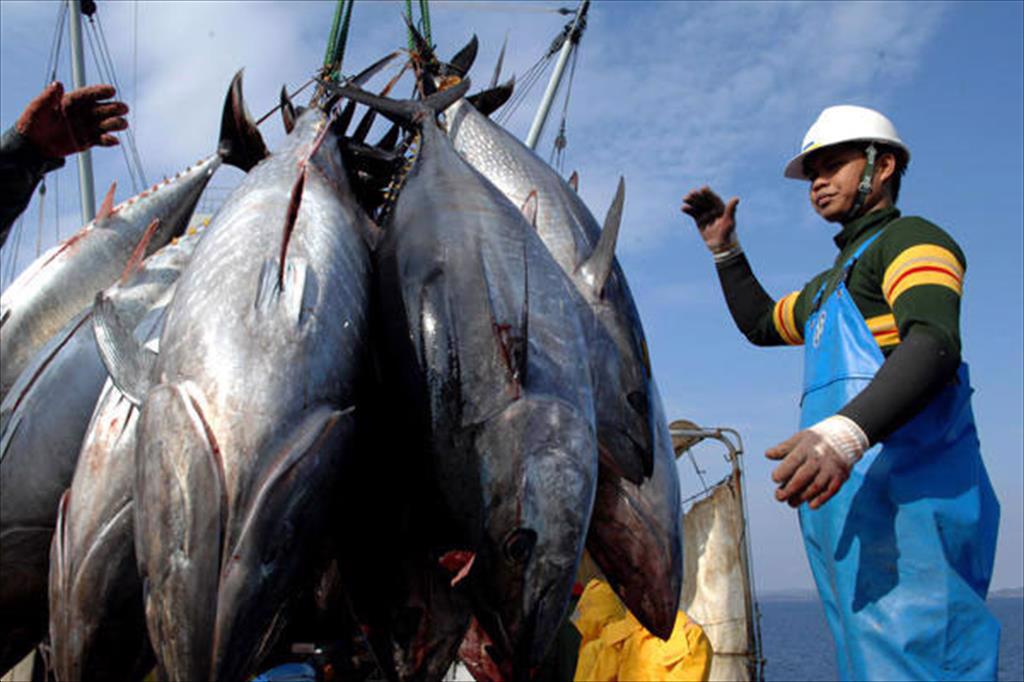
According to statistics from Vietnam Customs, tuna exports to the Middle Eastern market reached nearly USD 113 million in 2024, ranking fourth after the U.S., the EU, and CPTPP member countries. Vietnamese tuna products have penetrated almost all nations in this region, with Israel, Lebanon, and Egypt being the leading importers. Over the past year, tuna exports to key importing markets in the Middle East have all increased compared to the previous year.
Israel currently leads the region in importing Vietnamese tuna and is the second-largest single-country market after the U.S., accounting for nearly 7% of Vietnam’s total tuna export value in 2024, up 30% from 2023. Other countries such as Lebanon, Egypt, Saudi Arabia, and the UAE have also recorded strong double-digit growth.
Vietnam’s signing of the Comprehensive Economic Partnership Agreement (CEPA) with the UAE—one of the region’s largest economic hubs and a key destination for Vietnamese seafood, including tuna—is creating further opportunities to boost exports. Currently, both Vietnam and the UAE are striving to complete the CEPA ratification process by Q1 2025. Once the agreement comes into effect, tariffs on Vietnamese tuna exports to the UAE will immediately be reduced to 0%.
Significant challenges
Despite its potential, seafood exports to the Middle East face several challenges, with the most notable being Halal certification requirements. Products must be processed and certified in accordance with Islamic law, necessitating significant investment from Vietnamese exporters in production processes, inspections, and quality management.
According to projections by various organizations and experts, the global Muslim population is expected to increase by approximately 50% by 2050, reaching 2.76 billion people. As a result, the global Halal industry is anticipated to grow substantially, driven by increased investment and technological advancements, such as pork detection technologies and Halal verification systems.
If Vietnamese products can meet Halal certification requirements in the UAE, this would serve as a key gateway to access broader Middle Eastern markets. Notably, Halal standards increasingly align with modern consumer trends, emphasizing high quality, ethical sourcing, environmental sustainability, and clear traceability.
However, a major challenge for the global Halal food industry lies in the lack of uniformity in certification procedures. The differing Halal certification processes across countries can create confusion and hinder Vietnamese businesses in their efforts to enter new markets. Furthermore, companies must ensure a clear understanding of the specific components that constitute Halal-compliant food to fully meet market requirements.
(seafood.vasep.com.vn) During the week from April 4th to 10th, 2026, Quang Ngai province intensified its monitoring and law enforcement activities with the determination to eliminate illegal, unreported, and unregulated (IUU) fishing practices.
(seafood.vasep.com.vn) Thanh Hoa’s shrimp sector is undergoing a strong transformation by accelerating the adoption of high technology, helping to improve productivity, increase profits, and meet market demands. The province currently has about 4,100 hectares of shrimp farming, with output continuing to rise despite stable farming area, mainly due to the shift from traditional methods to intensive and super-intensive farming.
(vasep.com.vn) Amid ongoing volatility in global seafood trade, Vietnam’s crab exports have made a fairly positive start to 2026. According to Vietnam Customs statistics, export turnover in the first two months of 2026 reached nearly USD 55 million, up 24% compared to the same period in 2025 and more than 2.2 times higher than in the same period of 2024. This indicates that crab exports are entering 2026 with stronger growth momentum, particularly in Asian markets.
(seafood.vasep.com.vn) Da Nang City has fully implemented all recommendations from the European Commission (EC) regarding the fight against illegal, unreported and unregulated (IUU) fishing, creating an important foundation for the removal of the “yellow card” in the near future.
(seafood.vasep.com.vn) In Hoa Vang district (Da Nang City), red tilapia farming is demonstrating clear economic efficiency, becoming a promising livelihood that helps many households increase their income. A notable example is the model of Mr. Huynh Ngoc Nam, who operates two red tilapia ponds covering more than 4 hectares, generating stable annual income.
(seafood.vasep.com.vn) In Gia Vien district, tilapia farming—particularly the “duong nghiep” strain—is expanding rapidly and gradually becoming an efficient production model for local farmers. Hatcheries in the area are supplying high-quality, uniform, and disease-free fingerlings, meeting the growing demand for commercial farming.
(seafood.vasep.com.vn) On the afternoon of March 19, Vice Chairman of the Ca Mau Provincial People’s Committee, Le Van Su, chaired a meeting to address bottlenecks and propose solutions to expand the super-intensive whiteleg shrimp farming model using low water exchange and high biosecurity standards (RAS-IMTA).
(seafood.vasep.com.vn) On March 10, 2026, the Ho Chi Minh City People’s Committee issued Decision No. 1377/QD-UBND approving the Aquatic Animal Disease Prevention and Control Plan for the 2026–2030 period. The decision takes effect from the date of signing and replaces previous plans for the 2021–2030 period that had been issued prior to the administrative merger in Ba Ria – Vung Tau, Binh Duong, and Ho Chi Minh City.
(vasep.com.vn) In 2025, Chile imported more than USD 156 million worth of tuna, up 8.1% compared to the previous year and the highest level in the past five years. As the supply structure in this market is rapidly shifting, Vietnamese tuna is facing both opportunities to expand market share and increasing competitive pressure from Thailand, Colombia, and China.
(seafood.vasep.com.vn) Vinh Long Province is stepping up efforts to develop brackish water shrimp farming in a sustainable direction, identifying it as a key sector in its agricultural structure. In 2026, the province aims to reach around 71,300 hectares of shrimp farming, with an output of over 314,000 tons.
VASEP - HIỆP HỘI CHẾ BIẾN VÀ XUẤT KHẨU THỦY SẢN VIỆT NAM
Chịu trách nhiệm: Ông Nguyễn Hoài Nam - Phó Tổng thư ký Hiệp hội
Đơn vị vận hành trang tin điện tử: Trung tâm VASEP.PRO
Trưởng Ban Biên tập: Bà Phùng Thị Kim Thu
Giấy phép hoạt động Trang thông tin điện tử tổng hợp số 138/GP-TTĐT, ngày 01/10/2013 của Bộ Thông tin và Truyền thông
Tel: (+84 24) 3.7715055 – (ext.203); email: kimthu@vasep.com.vn
Trụ sở: Số 7 đường Nguyễn Quý Cảnh, Phường An Phú, Quận 2, Tp.Hồ Chí Minh
Tel: (+84) 28.628.10430 - Fax: (+84) 28.628.10437 - Email: vasephcm@vasep.com.vn
VPĐD: số 10, Nguyễn Công Hoan, Ngọc Khánh, Ba Đình, Hà Nội
Tel: (+84 24) 3.7715055 - Fax: (+84 24) 37715084 - Email: vasephn@vasep.com.vn