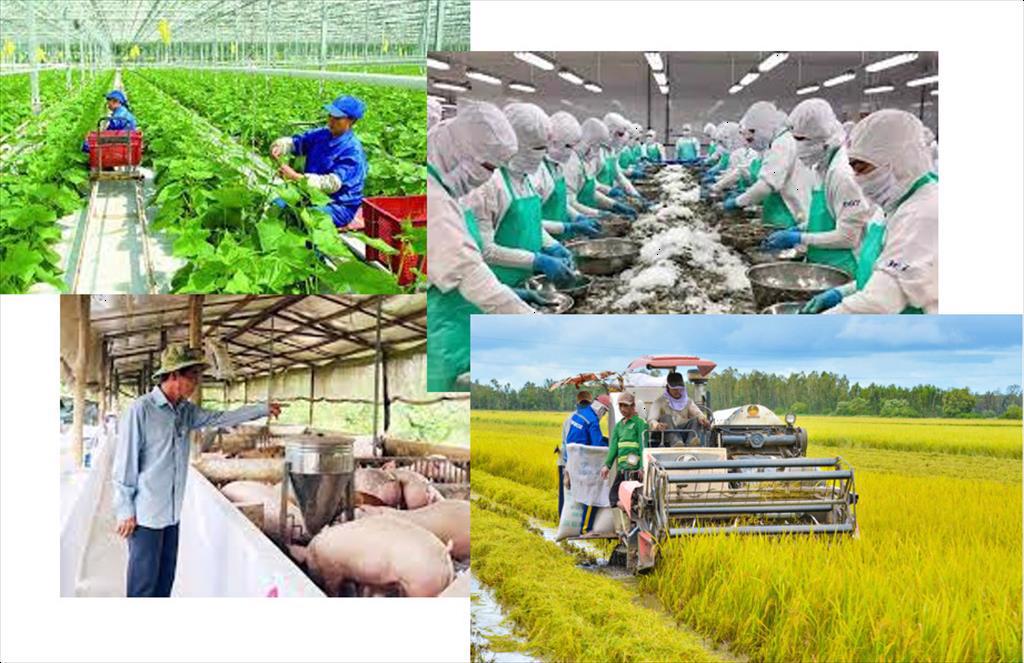
In the face of escalating trade tensions and rising protectionism, the Ministry of Industry and Trade, and the Ministry of Agriculture and Environment have identified the diversification of export markets for Vietnam’s agro-forestry-aquatic products as a strategic priority. The long-term objective is to enhance product quality to unlock access to new and promising markets.
Diversification and reorientation
According to the Ministry of Agriculture and Environment (MAE), Vietnam’s agricultural product exports are inevitably affected by disruptions in global supply chains and the imposition of unilateral, stringent tariff policies by major economies. Nonetheless, these challenges also present an opportunity for Vietnam to adjust its export strategy and focus more intently on emerging and high-potential markets.
Southeast Asia remains a key export destination for Vietnamese agricultural products. In 2024, the Philippines was Vietnam’s largest rice importer, purchasing approximately 3.6 million tonnes, equivalent to 40% of the country's total rice exports. Meanwhile, the EU has emerged as Vietnam’s third-largest export market since the EU-Vietnam Free Trade Agreement (EVFTA) came into effect in August 2020. Vietnamese products such as rice, coffee, and seafood have benefitted from preferential tariffs under the agreement, paving the way for stronger market penetration. In 2024, Vietnam’s total export turnover to the EU was estimated at 51.7 billion USD, an increase of 18.5% compared to 2023.
Japan and the Republic of Korea also continue to favour Vietnamese agricultural products, including rice, coffee, tropical fruits, and pepper, thanks to their high quality and alignment with consumer preferences in these countries.
Deputy Minister of Agriculture and Environment Phung Duc Tien said the ministry has been actively guiding businesses on the importance of expanding into the Middle East and Islamic markets. These regions represent strategic growth areas amid increasing demand for agricultural products, particularly for processed foods, fruits, and seafood. Tien further highlighted the growing demand for Halal-certified products, which presents a significant opportunity for Vietnam to boost exports, especially in seafood, rice, and processed foods.
Nguyen Hoai Nam, Deputy General Secretary of the Vietnam Association of Seafood Exporters and Producers (VASEP), added that Vietnamese tuna and pangasius currently account for a substantial share of the seafood imports into the Middle East.
According to representatives from the Ministry of Industry and Trade, in addition to the Middle East and Islamic nations, Vietnamese agricultural products also have considerable potential in emerging markets such as Africa, India, and Latin America. These regions are characterised by large populations and growing demand for food, particularly in segments such as processed food, rice, seafood, and tropical fruits.
For instance, with a population nearing 1.4 billion, India is a promising market with a high demand for Vietnamese dragon fruit, as noted by Vietnam’s Trade Counsellor in India Bui Trung Thuong. However, Vietnamese businesses have yet to fully tap into this market.
Better understanding markets and observing legal requirements
Given the intensifying trade conflicts and the growing trend of protectionism, the Ministry of Industry and Trade stressed that expanding into emerging markets will help reduce Vietnam’s reliance on traditional markets such as China and the US, both of which are currently subject to geopolitical and trade-related uncertainties. While these new markets offer fresh opportunities, they also come with their own sets of challenges.
Ngo Xuan Nam, Deputy Director of the Vietnam Sanitary and Phytosanitary Notification Authority and Enquiry Point (SPS Vietnam), noted that countries such as Japan, the Republic of Korea and EU member states demand high quality standards and stringent production protocols. This compels domestic agricultural exporters to invest in quality improvement and modernise production processes to meet these requirements.
Each emerging market has its own specific characteristics. While acknowledging the rising demand for seafood in the Middle East, particularly in countries like Israel, the UAE, Saudi Arabia, and Qatar, the official cautioned that to effectively enter these markets, Vietnamese businesses must prioritise compliance with Halal standards, as the majority of consumers in the region are Muslims./.
Source: VietnamPlus
(seafood.vasep.com.vn) Lobster exports to China continued to surge in the first half of this year, putting the lobster industry on the verge of reaching an export value exceeding $1 billion.
(seafood.vasep.com.vn) More than five years after the UK-Vietnam Free Trade Agreement (UKVFTA) took effect, Vietnamese seafood is steadily expanding its market share in the United Kingdom, one of Europe’s major seafood import markets with stable and diverse consumer demand.
(seafood.vasep.com.vn) At Van Hung Commune, Khanh Hoa Province, the Khanh Hoa Agricultural Extension Center, in collaboration with the Northern Aquaculture Research Center and the Van Hung Public Service Center, organized a technical training course on the industrial-scale production of disease-free golden pompano (Trachinotus falcatus) seed for local marine fish farmers.
(seafood.vasep.com.vn) Vietnam’s squid and octopus exports maintained a strong recovery in the first five months of 2026, reaching more than USD 302 million, up 17% compared to the same period in 2025. Growth was primarily driven by Asian markets, including South Korea, Japan, Thailand, and China, while exports to the United States and the European Union continued to face headwinds from cautious consumer demand and increasingly stringent compliance requirements.
Vietnamese seafood giant Minh Phu Group has inaugurated a VND1.5 trillion (US$57.4 million) seafood processing plant in Ca Mau Province.
(vasep.com.vn) From 19–21 August 2026, the Vietnam International Seafood Exhibition (Vietfish 2026) will take place at the Saigon Exhibition and Convention Center (SECC) in Ho Chi Minh City. Under the theme "Innovation – Sustainability", Vietfish 2026 continues to serve as Vietnam's flagship annual seafood event, bringing together seafood producers, exporters, importers, buyers, industry experts, government agencies, and stakeholders from across the domestic and global seafood value chain.
(seafood.vasep.com.vn) Vietnam’s tilapia exports maintained strong growth momentum in May 2026, reaching USD 14 million, up 18% compared with the same month last year. Cumulative export value for the first five months of 2026 totaled USD 62 million, representing a remarkable 101% increase over the same period in 2025, highlighting the sector’s strong recovery in international markets.
(seafood.vasep.com.vn) Vietnam’s tuna exports reached USD 367 million in the first five months of 2026, down 7% compared to the same period in 2025. While the decline is not yet severe, the more concerning issue is that pressure is mounting in key markets such as the United States and the European Union, just as ocean freight rates are rising sharply on long-haul routes. The current situation is therefore not merely about slower orders, but rather a clear restructuring phase for Vietnam’s tuna industry.
(seafood.vasep.com.vn) The year 2026 marks a period of strong growth for Vietnam’s tilapia industry, but it is also a time when international export competition is becoming increasingly intense. Vietnam’s tilapia exports reached USD 99 million in 2025, up 140% compared to the previous year. In the first four months of 2026 alone, export value reached USD 49 million, a 151% increase year-on-year. As global demand for affordable whitefish continues to rise, Vietnam is emerging as a noteworthy competitor to traditional tilapia powerhouses such as China, Indonesia, Brazil, and Egypt.
(seafood.vasep.com.vn) With continued policy support, technological innovation and close coordination among authorities, businesses and farmers, Vietnam’s pangasius industry is expected to make a strong and sustainable breakthrough during the 2026–2030 period, reinforcing its position as the world’s leading exporter of the fish.
VASEP - HIỆP HỘI CHẾ BIẾN VÀ XUẤT KHẨU THỦY SẢN VIỆT NAM
Chịu trách nhiệm: Ông Nguyễn Hoài Nam - Phó Tổng thư ký Hiệp hội
Đơn vị vận hành trang tin điện tử: Trung tâm VASEP.PRO
Trưởng Ban Biên tập: Bà Phùng Thị Kim Thu
Giấy phép hoạt động Trang thông tin điện tử tổng hợp số 138/GP-TTĐT, ngày 01/10/2013 của Bộ Thông tin và Truyền thông
Tel: (+84 24) 3.7715055 – (ext.203); email: kimthu@vasep.com.vn
Trụ sở: Số 7 đường Nguyễn Quý Cảnh, Phường An Phú, Quận 2, Tp.Hồ Chí Minh
Tel: (+84) 28.628.10430 - Fax: (+84) 28.628.10437 - Email: vasephcm@vasep.com.vn
VPĐD: số 10, Nguyễn Công Hoan, Ngọc Khánh, Ba Đình, Hà Nội
Tel: (+84 24) 3.7715055 - Fax: (+84 24) 37715084 - Email: vasephn@vasep.com.vn