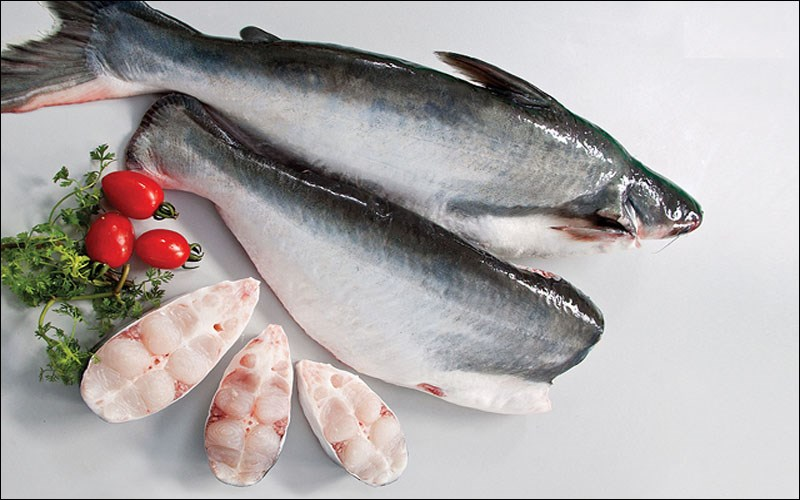
Vietnam’s pangasius (tra fish) industry is enjoying one of its most favourable periods in recent years, with raw fish prices remaining at multi-year highs, generating substantial profits for farmers and providing fresh momentum for seafood processing and exports.
However, to secure sustainable growth amid intensifying competition and increasingly stringent technical barriers in export markets, the billion-dollar industry must address long-standing challenges related to breed quality and disease control.
Positive growth
In the current farming season, Nguyen Van Tuan, a pangasius farmer in An Huu commune of Dong Thap province, invested in a 3,000sq.m farming area. After selling more than 100 tonnes of commercial fish at 33,000 VND (1.25 USD) per kg, he has decided to reinvest in a new production cycle.
According to Tuan, this is the first time in many years that pangasius prices have remained stable at above 30,000 VND per kg for an extended period. With healthy profits after production costs, farmers are increasingly confident about staying in the business.
The strong performance is not limited to fish farming. Seafood processors and exporters have also benefited from rising demand in major markets, including China, the European Union (EU), ASEAN countries and the Middle East.
Nguyen Huu Nghia, Deputy General Director of Go Dang Joint Stock Company, said the company exported more than 15,000 tonnes of seafood products in the first four months of 2026. Pangasius fillets remained its flagship product, generating nearly 40 million USD in export revenue, up 25% year-on-year.
According to Deputy Secretary General of the Vietnam Association of Seafood Exporters and Producers (VASEP) Le Hang, pangasius exports exceeded 200 million USD in April, nearly 20% higher than the same period last year and marking another month of double-digit growth. During the first five months of 2026, total pangasius export turnover surpassed 900 million USD, reflecting strong growth momentum for one of Vietnam’s key export commodities.
As one of the country’s strategic aquaculture products, pangasius not only contributes significantly to export earnings but also supports the livelihoods of tens of thousands of households. In 2025, the farming area expanded to more than 5,500 hectares nationwide, producing approximately 1.7 million tonnes and generating nearly 2.2 billion USD in export value.
Addressing issues of breed quality, diseases
Despite these achievements, the sector continues to face major challenges. Seed quality remains a critical issue, while disease outbreaks and climate-related risks have affected production efficiency.
Although the industry currently operates around 2,000 hectares of nursery facilities capable of supplying 4–4.5 billion fingerlings annually, localised shortages occurred during 2024–2025, pushing prices higher and disrupting production chains.
Experts attribute declining survival rates to climate change, erratic weather conditions and increasingly complex disease patterns. In some periods, survival rates of juvenile fish fell to just 5–15%, while high mortality was reported in fish younger than 30 days.
Tran Huu Phuc, Deputy Director of the Southern Freshwater Aquaculture Research Centre under the Vietnam Fisheries Science Institute, stressed the need to improve breeding through a combination of genetics, nursery technology and nutrition. He said traditional breeding methods should be integrated with gene technology to improve accuracy and maintain genetic gains, while hatchery management should be restructured with stricter environmental and biosecurity controls.
Meanwhile, Dong Thap province, which accounts for around 35% of the country’s pangasius output with some 2,500 hectares of farming ponds, is accelerating the restructuring of its industry through high technology. Local authorities are promoting improved broodstock, digital transformation, AI-assisted feeding systems and environmental management robots, while also researching salt-tolerant pangasius to expand farming areas.
With continued policy support, technological innovation and close coordination among authorities, businesses and farmers, Vietnam’s pangasius industry is expected to make a strong and sustainable breakthrough during the 2026–2030 period, reinforcing its position as the world’s leading exporter of the fish./.
(seafood.vasep.com.vn) Vietnamese seafood exports recorded impressive growth, generating nearly 6 billion USD in revenue during the first six months of the year, up 13% compared with the same period last year.
(seafood.vasep.com.vn) Fishermen in Ha Tinh are gradually overcoming difficulties to maintain the efficiency of seafood exploitation. In the first six months of 2026, the entire province achieved a production of more than 23,000 tons of seafood, worth more than 1,200 billion VND.
(seafood.vasep.com.vn) June 2026 brought encouraging signs for Vietnam's tuna exports, with export value rising 20% year-on-year to nearly USD 72 million. However, this increase has yet to offset the prolonged slowdown seen in key markets such as the European Union (EU), where import demand remains weak. The outlook for the second half of the year is expected to become more challenging as freight rates continue to climb.
(vasep.com.vn) As part of the Vietnam Fisheries International Exhibition (Vietfish 2026), the Vietnam Association of Seafood Exporters and Producers (VASEP), in collaboration with the Agency for Domestic Market Management and Development under the Ministry of Industry and Trade, will organize the Domestic Seafood Supply–Demand Matching Program on the morning of August 20, 2026, at the Saigon Exhibition and Convention Center (SECC), Ho Chi Minh City. The program aims to foster direct business connections between Vietnamese seafood producers and processors and domestic distributors, retailers, and foodservice channels.
(seafood.vasep.com.vn) The Cooking Show will be one of the most engaging experiential highlights of Vietfish 2026. Taking place over three days, from August 19–21, 2026, at Hall B1, SECC, Ho Chi Minh City, the event will offer visitors a vibrant culinary space where Vietnamese seafood is showcased through its flavors, stories, and real-life culinary applications.
(seafood.vasep.com.vn) Vietnam's pangasius exports reached USD 205 million in June 2026, up 5% compared with the same month in 2025. Cumulative export value for the first six months of the year totaled USD 1.1 billion, an increase of 12% year-on-year. Growth was primarily driven by strong demand from China and CPTPP markets, while exports to the United States and Brazil continued to decline.
(seafood.vasep.com.vn) In the first six months of 2026, Ha Tinh province continued to implement comprehensive solutions to combat IUU fishing; strictly manage the fishing fleet, control fishing vessels entering and leaving ports, operate vessel tracking devices, trace the origin of seafood, and severely punish violations.
(seafood.vasep.com.vn) Vietnam's tilapia exports reached USD 7 million in June 2026, down 32% compared with the same month in 2025. Nevertheless, thanks to strong growth in the first five months of the year, cumulative tilapia exports in the first half of 2026 totaled USD 69 million, up 67% year on year.
(seafood.vasep.com.vn) Sa Giang Import-Export Joint Stock Company, a member of the Vietnam Association of Seafood Exporters and Producers (VASEP), has been honored with the "Famous Brand - Competitive Vietnamese Brand 2026" certification at an award ceremony organized by the Vietnam Intellectual Property Association (VIPA).
(seafood.vasep.com.vn) China imported nearly $1.4 billion worth of Vietnamese seafood in the first half of the year, a 40% increase compared to the same period last year, surpassing the US to become the largest export market for the industry.
VASEP - HIỆP HỘI CHẾ BIẾN VÀ XUẤT KHẨU THỦY SẢN VIỆT NAM
Chịu trách nhiệm: Ông Nguyễn Hoài Nam - Phó Tổng thư ký Hiệp hội
Đơn vị vận hành trang tin điện tử: Trung tâm VASEP.PRO
Trưởng Ban Biên tập: Bà Phùng Thị Kim Thu
Giấy phép hoạt động Trang thông tin điện tử tổng hợp số 138/GP-TTĐT, ngày 01/10/2013 của Bộ Thông tin và Truyền thông
Tel: (+84 24) 3.7715055 – (ext.203); email: kimthu@vasep.com.vn
Trụ sở: Số 7 đường Nguyễn Quý Cảnh, Phường An Phú, Quận 2, Tp.Hồ Chí Minh
Tel: (+84) 28.628.10430 - Fax: (+84) 28.628.10437 - Email: vasephcm@vasep.com.vn
VPĐD: số 10, Nguyễn Công Hoan, Ngọc Khánh, Ba Đình, Hà Nội
Tel: (+84 24) 3.7715055 - Fax: (+84 24) 37715084 - Email: vasephn@vasep.com.vn