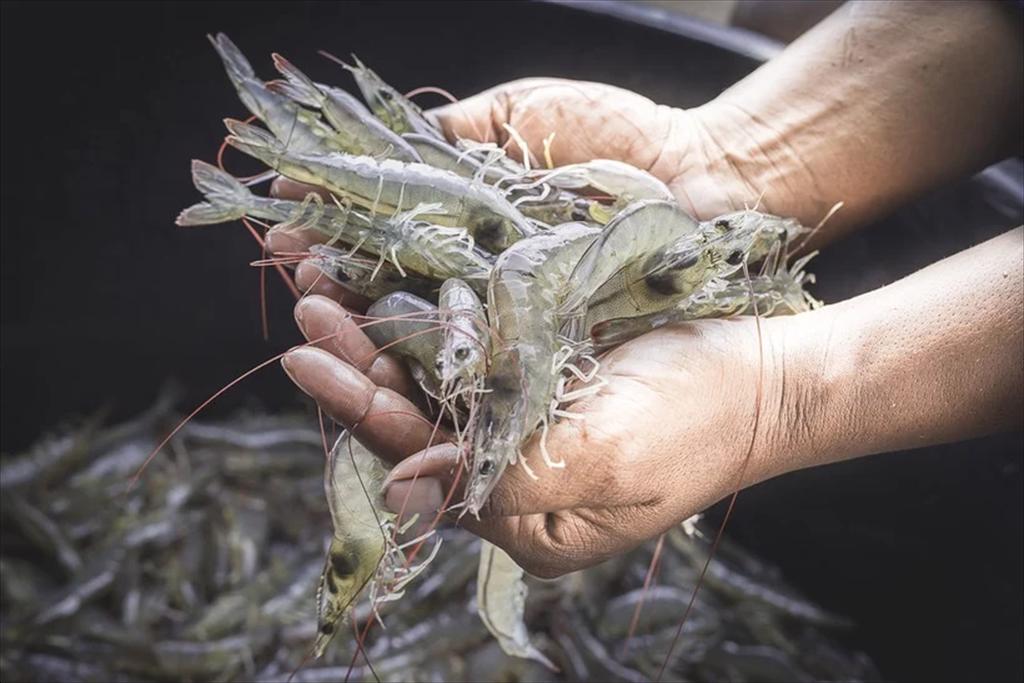
The project is jointly funded by the European Union (EU) and ActionAid International, with the objective of promoting a greener, cleaner, low-carbon, and socially responsible shrimp industry in Ca Mau.
Ca Mau is Vietnam's largest shrimp farming province, with approximately 411,000 hectares of shrimp farming area and an annual production of around 547,000 metric tons. The shrimp sector is not only the province's leading economic industry but also a key driver of socio-economic development and one of Vietnam's major seafood export sectors.
Despite these achievements, Ca Mau's shrimp industry continues to face significant challenges. International markets are becoming increasingly competitive, while major importing countries are imposing stricter requirements on greenhouse gas emissions, traceability, environmental protection, social responsibility, and supply chain transparency under Environmental, Social and Governance (ESG) standards.
Against this backdrop, shifting the shrimp industry toward higher quality and greater value addition—rather than simply expanding production—is considered an urgent priority. Science and technology, digital transformation, and comprehensive governance are regarded as essential foundations for strengthening the industry's competitiveness.
According to representatives of ActionAid International, the four-year "Sustainable Shrimp Industry Governance" project aims to help Ca Mau enhance governance capacity, promote sustainable shrimp production, and improve the international competitiveness of its shrimp products.
The project, with a total budget of VND 42 billion (approximately USD 1.6 million), will be implemented from May 24, 2026, to March 31, 2029 in five communes: Song Doc, Dong Hai, Khanh Hai, Hoa Dinh Thanh, and An Trach. Nature and Environment e-magazine will participate in communication activities under the project.
One of the project's key objectives is to develop the "Low-Carbon Shrimp" brand for Ca Mau. Under the initiative, shrimp farmers will gradually adopt environmentally friendly farming models, reduce greenhouse gas emissions, improve farming practices to meet international standards, and strengthen traceability systems to better satisfy export market requirements, thereby increasing incomes and supporting sustainable livelihoods.
For enterprises, cooperatives, and cooperative groups, the project will support the development of transparent value chains, strengthen traceability, improve management capacity, and expand export markets, while gradually building the Low-Carbon Shrimp brand associated with sustainable development.
For government agencies, the project will facilitate the shrimp sector's transition toward greener and more sustainable development by improving policy frameworks, strengthening public administration, and enhancing coordination among stakeholders across the shrimp value chain.
The project consists of three main components.
The first component focuses on strengthening the capacity of local communities and businesses through the establishment and operation of 10 farmer groups, 10 shrimp farming cooperatives, the development of a Green Business Alliance, the training of master trainers, technical training on shrimp farming and ESG standards, and communications activities to raise awareness of the practical implementation of these standards.
The second component aims to enhance community-based monitoring and support compliance with the Aquaculture Stewardship Council (ASC) standards for responsible aquaculture. Activities include developing community monitoring tools, providing traceability training, simplifying certification processes, supporting farming households in transitioning to ASC standards, and assisting businesses in integrating ESG principles throughout their value chains.
The third component focuses on market research for certified shrimp products, strengthening sustainable purchasing systems, promoting policy dialogue, connecting domestic and international markets, developing ESG communications, and implementing broader awareness campaigns on sustainable shrimp development.
Under the project's overall targets, 500 shrimp farming households in the Mekong Delta will receive support to improve management capacity, adopt low-carbon farming practices, and meet social responsibility and governance standards. In addition, 300 enterprises operating in shrimp farming and processing will be assisted in improving quality management systems, labor conditions, and traceability to maintain and expand access to export markets.
(vasep.com.vn) As part of the Vietnam Fisheries International Exhibition (Vietfish 2026), the Vietnam Association of Seafood Exporters and Producers (VASEP), in collaboration with the Agency for Domestic Market Management and Development under the Ministry of Industry and Trade, will organize the Domestic Seafood Supply–Demand Matching Program on the morning of August 20, 2026, at the Saigon Exhibition and Convention Center (SECC), Ho Chi Minh City. The program aims to foster direct business connections between Vietnamese seafood producers and processors and domestic distributors, retailers, and foodservice channels.
(seafood.vasep.com.vn) The Cooking Show will be one of the most engaging experiential highlights of Vietfish 2026. Taking place over three days, from August 19–21, 2026, at Hall B1, SECC, Ho Chi Minh City, the event will offer visitors a vibrant culinary space where Vietnamese seafood is showcased through its flavors, stories, and real-life culinary applications.
(seafood.vasep.com.vn) Vietnam's pangasius exports reached USD 205 million in June 2026, up 5% compared with the same month in 2025. Cumulative export value for the first six months of the year totaled USD 1.1 billion, an increase of 12% year-on-year. Growth was primarily driven by strong demand from China and CPTPP markets, while exports to the United States and Brazil continued to decline.
(seafood.vasep.com.vn) In the first six months of 2026, Ha Tinh province continued to implement comprehensive solutions to combat IUU fishing; strictly manage the fishing fleet, control fishing vessels entering and leaving ports, operate vessel tracking devices, trace the origin of seafood, and severely punish violations.
(seafood.vasep.com.vn) Vietnam's tilapia exports reached USD 7 million in June 2026, down 32% compared with the same month in 2025. Nevertheless, thanks to strong growth in the first five months of the year, cumulative tilapia exports in the first half of 2026 totaled USD 69 million, up 67% year on year.
(seafood.vasep.com.vn) Sa Giang Import-Export Joint Stock Company, a member of the Vietnam Association of Seafood Exporters and Producers (VASEP), has been honored with the "Famous Brand - Competitive Vietnamese Brand 2026" certification at an award ceremony organized by the Vietnam Intellectual Property Association (VIPA).
(seafood.vasep.com.vn) China imported nearly $1.4 billion worth of Vietnamese seafood in the first half of the year, a 40% increase compared to the same period last year, surpassing the US to become the largest export market for the industry.
(seafood.vasep.com.vn) As part of Vietfish 2026, the International Seafood Hosted Buyer Program has been designed as a dedicated B2B matchmaking initiative for selected international buyers. The program provides opportunities to meet directly with Vietnamese seafood companies, gain market insights, and experience Vietnam's seafood supply chain firsthand.
(seafood.vasep.com.vn) A Story from Cà Mau’s Coast It’s 5 AM in Cà Mau. Minh, a third-generation fisherman, is ready to set sail. But unlike his father and grandfather, his boat no longer runs on an old diesel engine that burns fuel and clouds the sky with smoke. Instead, it’s powered by a hybrid engine that saves 40% fuel—funded by an ESG program from a major seafood exporter.
(seafood.vasep.com.vn) Vietnam's pangasius industry is shifting its focus from increasing production volume to enhancing value-added products in order to meet the increasingly stringent requirements of export markets. In An Giang Province—the country's leading hub for pangasius farming and processing—businesses and farmers are prioritizing product quality, traceability, food safety, and sustainable development rather than expanding output.
VASEP - HIỆP HỘI CHẾ BIẾN VÀ XUẤT KHẨU THỦY SẢN VIỆT NAM
Chịu trách nhiệm: Ông Nguyễn Hoài Nam - Phó Tổng thư ký Hiệp hội
Đơn vị vận hành trang tin điện tử: Trung tâm VASEP.PRO
Trưởng Ban Biên tập: Bà Phùng Thị Kim Thu
Giấy phép hoạt động Trang thông tin điện tử tổng hợp số 138/GP-TTĐT, ngày 01/10/2013 của Bộ Thông tin và Truyền thông
Tel: (+84 24) 3.7715055 – (ext.203); email: kimthu@vasep.com.vn
Trụ sở: Số 7 đường Nguyễn Quý Cảnh, Phường An Phú, Quận 2, Tp.Hồ Chí Minh
Tel: (+84) 28.628.10430 - Fax: (+84) 28.628.10437 - Email: vasephcm@vasep.com.vn
VPĐD: số 10, Nguyễn Công Hoan, Ngọc Khánh, Ba Đình, Hà Nội
Tel: (+84 24) 3.7715055 - Fax: (+84 24) 37715084 - Email: vasephn@vasep.com.vn