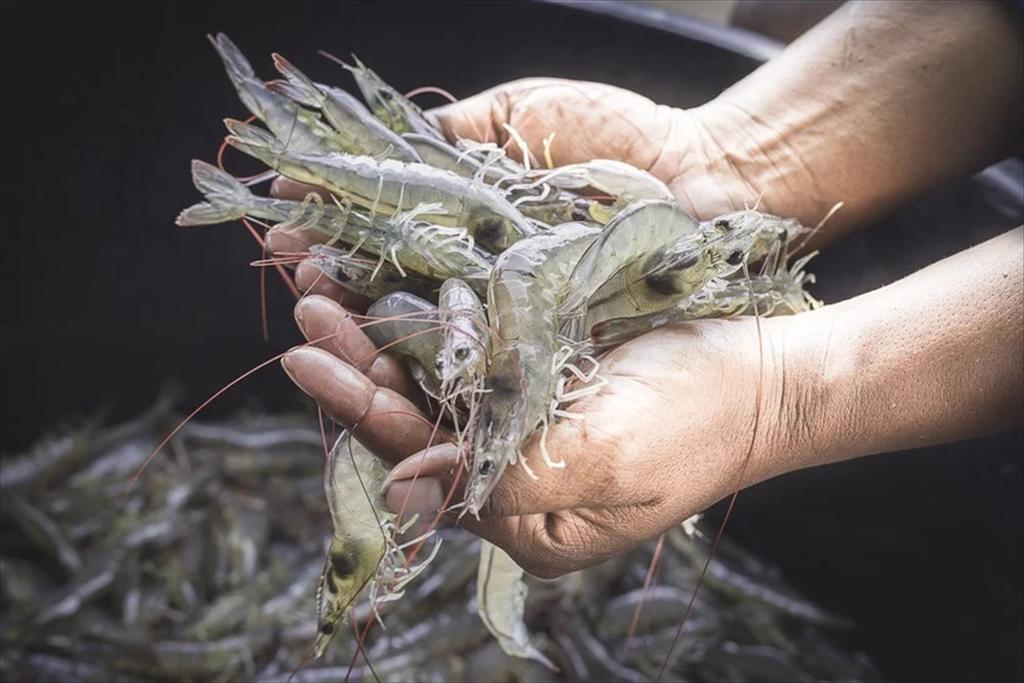
According to the Ministry of Agriculture and Environment, seafood exports in the first six months of the year increased by more than 11% compared to the same period last year. China led the way, followed by the US and Japan in third place. Amidst high shipping costs to distant markets, China has become a more attractive option due to its close geographical proximity, low logistics costs, and quick return on investment.
In terms of markets, China (including Hong Kong) continued to be the largest importer of Vietnamese seafood in the first half of the year. It was also the market that provided the most significant growth impetus for products such as shrimp, pangasius, lobster, mollusks, and live and frozen seafood.
Overall, in the first six months, seafood exports to the United States reached $897.9 million, almost the same as the same period last year. Although June saw a strong increase, the results for the entire six months show that overall US demand is still not truly sustainable. Factors such as inventory levels, cautious purchasing power, price competition, tariff policies, and technical barriers continue to force businesses to maintain caution when exploiting this market.
Exports to Japan reached $787.5 million, up 0.7%, continuing to be an important market for shrimp, squid, octopus, tuna, surimi, and processed seafood products, although purchasing power remains slow due to high food costs and a weak yen.
According to VASEP, the positive results in the first six months of the year have created a favorable foundation for the double-digit growth target of seafood exports in 2026. However, to maintain the growth momentum in the second half of the year, the industry needs to continue to leverage its advantages in fast-growing markets such as China, ASEAN, and South Korea , while strengthening its ability to comply with requirements in the United States, the EU, and Japan.
Simultaneously, businesses must control input costs and logistics, increase the proportion of deeply processed products, and enhance risk management capabilities to adapt to the constantly fluctuating market environment.
(vasep.com.vn) Vietnamese pangasius producer Vinh Hoan has won the top prize at the 2026 Seafood Excellence Asia Awards for its Cured Panga Croquette, highlighting the growing potential of value-added pangasius products in international markets.
(vasep.com.vn) The Global Shrimp Forum (GSF) 2026 is taking place from September 1–3 in Utrecht, the Netherlands, bringing together around 585 delegates from 40 countries, representing approximately 300 companies and organizations across the shrimp supply chain. Representatives from VASEP are attending the event as part of the Vietnamese delegation, strengthening connections with partners across the global shrimp industry.
(vasep.com.vn) At the international B2B seminar (Hosted Buyer Program) held as part of Vietfish 2026, Mr. Nguyen Hoang Pham, Sales Director of Tai Kim Anh Seafood Processing Joint Stock Company, delivered a presentation entitled “Vietnam’s Shrimp Industry: Changing for Sustainability.” From the perspective of a seafood processor, the presentation highlighted that Vietnam’s shrimp industry continues to play a leading role in seafood exports, but is entering a new phase of competition in which change is no longer an option, but a prerequisite for growth.
(seafood.vasep.com.vn) VIETFISH 2026 may have concluded after three dynamic days in Ho Chi Minh City, but conversations around the exhibition continue to resonate across international trade media, industry organizations, and the social media channels of participating companies.
(seafood.vasep.com.vn) Vietnam’s tilapia industry is maintaining strong growth momentum, with significant room for further expansion in the coming years. In 2025, total tilapia production reached approximately 420,000 tonnes, up 33% from 2024 and 2.2 times higher than in 2015. During 2015–2025, production grew at an average annual rate of around 8.4%. As production and exports continue to expand, food safety control is receiving increasing attention to ensure product quality, meet the increasingly stringent requirements of international markets, and provide a foundation for the sustainable development of Vietnam’s tilapia industry.
(seafood.vasep.com.vn) On the afternoon of August 19, 2026, as part of the Vietnam International Seafood Exhibition – Vietfish 2026, the Hosted Buyer Program continued with the seminar “Vietnam Seafood Outlook 2026–2027: A Strategic Sourcing Destination,” followed by 1-to-1 B2B meetings between international buyers and Vietnamese seafood businesses.
(seafood.vasep.com.vn) Speaking at the Opening Ceremony of VIETFISH 2026 on August 19 at the Saigon Exhibition and Convention Center (SECC), U.S. Consul General Melissa Brown highlighted the important role of the exhibition in connecting Vietnam’s growing seafood industry with buyers, suppliers, and partners from the United States and around the world.
(vasep.com.vn) Tomorrow, August 19, 2026, the Vietnam International Seafood Exhibition – Vietfish 2026 will officially open at the Saigon Exhibition and Convention Center (SECC) in Ho Chi Minh City. Taking place over three days, from August 19–21, Vietfish 2026 promises to provide a dynamic platform for business networking, trend updates, product experiences and comprehensive cooperation across the domestic and international seafood community.
(vasep.com.vn) The global tilapia market continues to grow, creating significant opportunities for countries with strengths in aquaculture, processing, and exports. Against this backdrop, Vietnam’s tilapia industry is gradually developing toward higher quality, greater product diversification, and broader market reach. At Vietfish 2026, the Vietnam Association of Seafood Exporters and Producers (VASEP), together with the VASEP Tilapia Producers and Exporters Club, will host a joint booth to promote the image and potential of Vietnamese tilapia to domestic and international buyers.
(seafood.vasep.com.vn) Vietnam’s seafood exports are heading towards $12 billion this year, potentially the highest level on record. Yet one of the country’s export strengths is facing a growing list of challenges.
VASEP - HIỆP HỘI CHẾ BIẾN VÀ XUẤT KHẨU THỦY SẢN VIỆT NAM
Chịu trách nhiệm: Ông Nguyễn Hoài Nam - Phó Tổng thư ký Hiệp hội
Đơn vị vận hành trang tin điện tử: Trung tâm VASEP.PRO
Trưởng Ban Biên tập: Bà Phùng Thị Kim Thu
Giấy phép hoạt động Trang thông tin điện tử tổng hợp số 138/GP-TTĐT, ngày 01/10/2013 của Bộ Thông tin và Truyền thông
Tel: (+84 24) 3.7715055 – (ext.203); email: kimthu@vasep.com.vn
Trụ sở: Số 7 đường Nguyễn Quý Cảnh, Phường An Phú, Quận 2, Tp.Hồ Chí Minh
Tel: (+84) 28.628.10430 - Fax: (+84) 28.628.10437 - Email: vasephcm@vasep.com.vn
VPĐD: số 10, Nguyễn Công Hoan, Ngọc Khánh, Ba Đình, Hà Nội
Tel: (+84 24) 3.7715055 - Fax: (+84 24) 37715084 - Email: vasephn@vasep.com.vn