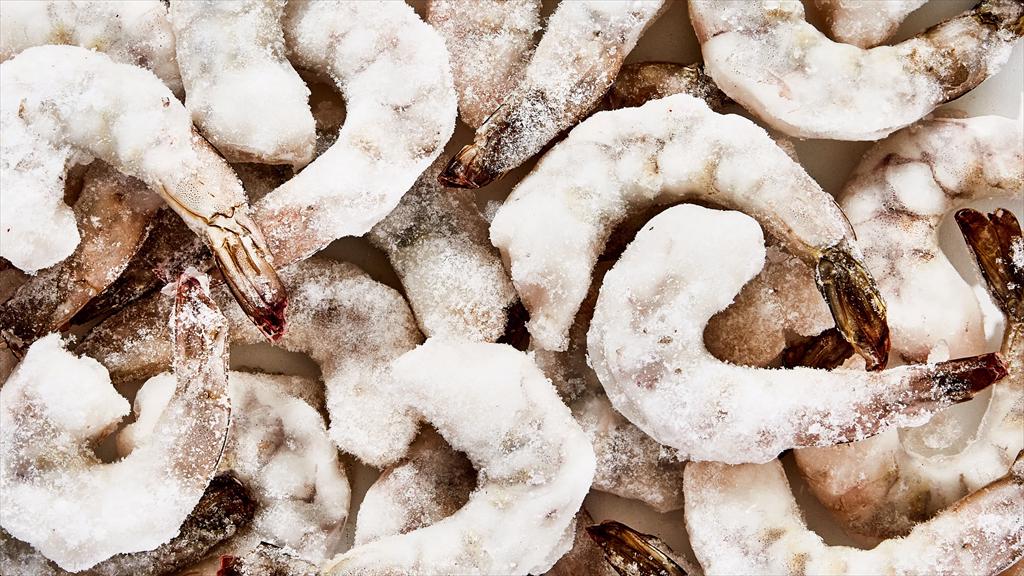
China’s Shrimp Imports Rebound Strongly
According to data from Shrimp Insights, China imported approximately 93,000 metric tons of shrimp in April 2026, up more than 30% compared to the same period last year. Cumulative imports in the first four months of 2026 exceeded 343,000 metric tons, up about 27%, while import value reached nearly USD 1.8 billion, an increase of more than 20%.
Notably, growth was relatively consistent throughout the first four months, indicating that demand not only recovered ahead of the Lunar New Year but also remained strong afterward. This is a positive signal for the global shrimp industry at a time when growth in many major markets remains subdued.
However, import volume growth continued to outpace value growth, suggesting that import prices have not improved proportionally. This means price competition in the Chinese market remains intense.
Ecuador Continues to Dominate
In terms of supply structure, Ecuador continues to overwhelmingly dominate the Chinese shrimp market.
During the first four months of 2026, Ecuador exported more than 263,000 metric tons of shrimp to China, accounting for over three-quarters of the market’s total shrimp imports. Ecuador’s key advantages remain its low production costs, large-scale output, and highly efficient logistics network.
Meanwhile, India and Indonesia have also accelerated exports, particularly in product categories suited to the restaurant and retail sectors.
This creates significant pressure for Vietnamese exporters. In the mainstream frozen shrimp segment, Vietnam finds it difficult to compete directly with Ecuador on price and volume. The remaining opportunities are primarily in higher-quality products, value-added processing, flexible delivery solutions, and premium market segments.
Another noteworthy trend is China’s growing demand for high-value cold-water shrimp products, such as Arctic shrimp, catering to premium retail and raw-consumption segments.
This trend indicates that Chinese consumers are no longer focused solely on low-priced products. The market is becoming increasingly segmented: strong demand remains for affordable shrimp for mass consumption, while demand is also expanding for premium products that offer superior quality, freshness, and consumer experience.
Vietnam’s Shrimp Exports to China Surge
According to Vietnam Customs data, Vietnam’s shrimp exports to China reached approximately USD 556 million during the first four months of 2026, up more than 55% year-on-year and accounting for nearly 38% of Vietnam’s total shrimp exports.
Including Hong Kong, China and Hong Kong together represented nearly 40% of Vietnam’s total shrimp export turnover.
At a time when the U.S. market continues to face various challenges and weak consumer demand, China has become the largest growth driver for Vietnam’s shrimp industry.
However, this growth does not fully reflect the competitiveness of Vietnam’s shrimp industry in the mainstream frozen whiteleg shrimp segment. A significant portion of the increase came from lobster exports to China.
For exporters of processed shrimp and conventional frozen shrimp products, price competition in the Chinese market remains extremely challenging.
Decree 280 Will Directly Impact Seafood Exporters
Beginning June 1, 2026, China officially implemented Decree 280, replacing the previous regulatory framework governing imported food enterprises.
According to CIFER system guidelines, seafood products belong to a category that requires registration recommendations from the competent authority of the exporting country before approval by the General Administration of Customs of China (GACC).
The CIFER system now manages the entire process, including enterprise registration, amendments, renewals, corrective actions, and re-inspections.
As a result, companies must ensure strict consistency among registration codes, facility names, addresses, raw material documentation, cold storage records, health certificates, and customs declaration information.
Under this new framework, compliance is no longer simply an administrative requirement; it has become a critical factor directly affecting a company’s ability to maintain market access.
What Should Businesses Do?
In the short term, China will likely remain the most important growth market for Vietnam’s shrimp industry. However, it is no longer a market that can be approached solely through price advantages or traditional commercial relationships.
Businesses need to view documentation management, traceability, and quality control as core components of their competitive capability.
Companies should thoroughly review all GACC/CIFER registration codes, facility information, cold storage records, brand labels, HS codes, and raw material documentation to ensure complete consistency between registered information and actual shipments.
In addition, stricter controls are needed regarding residue compliance, processing hygiene conditions, and batch-level traceability systems.
China still offers substantial growth potential for Vietnamese shrimp exporters. However, in this new phase, sustainable competitive advantage will not be determined by selling more products, but by the ability to navigate increasingly rigorous regulatory controls while minimizing compliance risks and associated costs.
(seafood.vasep.com.vn) Vietnamese seafood exports recorded impressive growth, generating nearly 6 billion USD in revenue during the first six months of the year, up 13% compared with the same period last year.
(seafood.vasep.com.vn) Fishermen in Ha Tinh are gradually overcoming difficulties to maintain the efficiency of seafood exploitation. In the first six months of 2026, the entire province achieved a production of more than 23,000 tons of seafood, worth more than 1,200 billion VND.
(seafood.vasep.com.vn) June 2026 brought encouraging signs for Vietnam's tuna exports, with export value rising 20% year-on-year to nearly USD 72 million. However, this increase has yet to offset the prolonged slowdown seen in key markets such as the European Union (EU), where import demand remains weak. The outlook for the second half of the year is expected to become more challenging as freight rates continue to climb.
(vasep.com.vn) As part of the Vietnam Fisheries International Exhibition (Vietfish 2026), the Vietnam Association of Seafood Exporters and Producers (VASEP), in collaboration with the Agency for Domestic Market Management and Development under the Ministry of Industry and Trade, will organize the Domestic Seafood Supply–Demand Matching Program on the morning of August 20, 2026, at the Saigon Exhibition and Convention Center (SECC), Ho Chi Minh City. The program aims to foster direct business connections between Vietnamese seafood producers and processors and domestic distributors, retailers, and foodservice channels.
(seafood.vasep.com.vn) The Cooking Show will be one of the most engaging experiential highlights of Vietfish 2026. Taking place over three days, from August 19–21, 2026, at Hall B1, SECC, Ho Chi Minh City, the event will offer visitors a vibrant culinary space where Vietnamese seafood is showcased through its flavors, stories, and real-life culinary applications.
(seafood.vasep.com.vn) Vietnam's pangasius exports reached USD 205 million in June 2026, up 5% compared with the same month in 2025. Cumulative export value for the first six months of the year totaled USD 1.1 billion, an increase of 12% year-on-year. Growth was primarily driven by strong demand from China and CPTPP markets, while exports to the United States and Brazil continued to decline.
(seafood.vasep.com.vn) In the first six months of 2026, Ha Tinh province continued to implement comprehensive solutions to combat IUU fishing; strictly manage the fishing fleet, control fishing vessels entering and leaving ports, operate vessel tracking devices, trace the origin of seafood, and severely punish violations.
(seafood.vasep.com.vn) Vietnam's tilapia exports reached USD 7 million in June 2026, down 32% compared with the same month in 2025. Nevertheless, thanks to strong growth in the first five months of the year, cumulative tilapia exports in the first half of 2026 totaled USD 69 million, up 67% year on year.
(seafood.vasep.com.vn) Sa Giang Import-Export Joint Stock Company, a member of the Vietnam Association of Seafood Exporters and Producers (VASEP), has been honored with the "Famous Brand - Competitive Vietnamese Brand 2026" certification at an award ceremony organized by the Vietnam Intellectual Property Association (VIPA).
(seafood.vasep.com.vn) China imported nearly $1.4 billion worth of Vietnamese seafood in the first half of the year, a 40% increase compared to the same period last year, surpassing the US to become the largest export market for the industry.
VASEP - HIỆP HỘI CHẾ BIẾN VÀ XUẤT KHẨU THỦY SẢN VIỆT NAM
Chịu trách nhiệm: Ông Nguyễn Hoài Nam - Phó Tổng thư ký Hiệp hội
Đơn vị vận hành trang tin điện tử: Trung tâm VASEP.PRO
Trưởng Ban Biên tập: Bà Phùng Thị Kim Thu
Giấy phép hoạt động Trang thông tin điện tử tổng hợp số 138/GP-TTĐT, ngày 01/10/2013 của Bộ Thông tin và Truyền thông
Tel: (+84 24) 3.7715055 – (ext.203); email: kimthu@vasep.com.vn
Trụ sở: Số 7 đường Nguyễn Quý Cảnh, Phường An Phú, Quận 2, Tp.Hồ Chí Minh
Tel: (+84) 28.628.10430 - Fax: (+84) 28.628.10437 - Email: vasephcm@vasep.com.vn
VPĐD: số 10, Nguyễn Công Hoan, Ngọc Khánh, Ba Đình, Hà Nội
Tel: (+84 24) 3.7715055 - Fax: (+84 24) 37715084 - Email: vasephn@vasep.com.vn