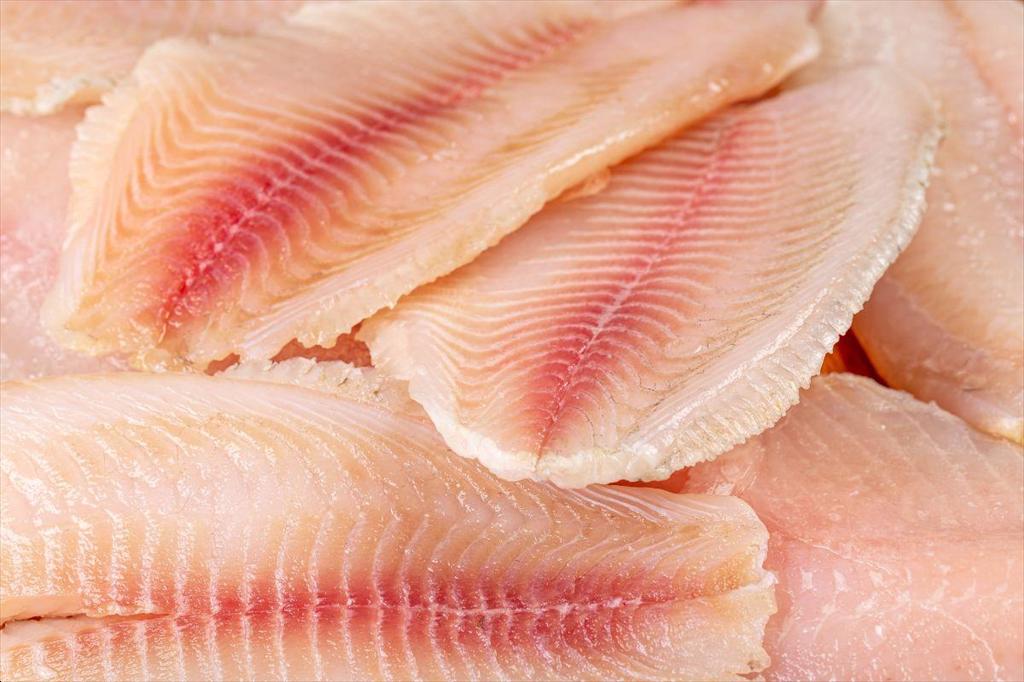
Saudi Arabia leads tilapia imports in Asia
Saudi Arabia was Vietnam’s largest tilapia import market in Asia during the first four months of 2026, with export turnover reaching USD 3 million. The market accounted for 6% of Vietnam’s total tilapia export value and posted an impressive increase of 542% compared to the same period in 2025.
In terms of product composition, Saudi Arabia primarily imported frozen whole tilapia, which accounted for 89% of export value. The remaining 11% consisted of frozen tilapia fillets.
Japan mainly imports frozen fillets
Vietnam’s tilapia exports to Japan reached USD 1 million during the first four months of 2026, representing 2% of total tilapia exports. Compared with the same period in 2025, exports to Japan increased by 92%.
Japan’s import structure was dominated by frozen tilapia products under HS Chapter 03. Frozen fillets accounted for 89% of export value, while other HS 03 products represented 11%, mainly frozen whole fish and a small volume of fresh and chilled products. Value-added products accounted for only a negligible share.
Malaysia and South Korea focus on frozen whole fish
Malaysia recorded import value of USD 1 million, accounting for 2% of Vietnam’s total tilapia exports during the first four months of the year and increasing by 144% year-on-year.
Unlike Japan, Malaysia primarily imported frozen whole tilapia, which represented 68% of export value. Frozen fillets accounted for the remaining 32%.
Vietnam’s tilapia exports to South Korea reached approximately USD 628,000 during the first four months of 2026, accounting for 1.3% of total export value and declining by 35% compared with the same period last year.
In terms of product composition, South Korea imported exclusively frozen whole tilapia. No imports of frozen tilapia fillets or value-added tilapia products were recorded during the period.
UAE records small export value but exceptional growth
Exports to the United Arab Emirates (UAE) reached USD 119,000, accounting for 0.2% of Vietnam’s total tilapia exports. According to Vietnam Customs data, export value increased by an extraordinary 248,583% compared with the same period in 2025.
The product structure in the UAE was similar to that of South Korea, with frozen whole fish under HS Chapter 03 accounting for 100% of export value.
Middle East and ASEAN markets drive regional growth
By regional grouping, tilapia exports to the Middle East exceeded USD 3 million during the first four months of 2026, accounting for 6.5% of Vietnam’s total tilapia export value and increasing by 395% year-on-year. Saudi Arabia contributed the majority of the region’s import value.
ASEAN markets generated USD 1 million in export turnover, accounting for 2.2% of total tilapia exports and recording growth of 139%.
Overall, Vietnam’s tilapia exports to Asia during the first four months of 2026 displayed significant differences in both market performance and product composition. Japan and Taiwan mainly imported frozen fillets, while Malaysia, Saudi Arabia, South Korea, and the UAE focused more heavily on frozen whole fish.
At present, value-added tilapia products still account for only a small share of Vietnam’s tilapia exports to Asian markets. This is partly because Vietnam’s tilapia industry remains in a development phase, with many companies still concentrating on traditional product lines while gradually investing in value-added segments.
As demand for convenient whitefish products continues to grow across the region, Vietnamese tilapia still has substantial opportunities to expand market share and increase export value in Asian markets through the development of higher-value processed products.
(seafood.vasep.com.vn) The year 2026 marks a period of strong growth for Vietnam’s tilapia industry, but it is also a time when international export competition is becoming increasingly intense. Vietnam’s tilapia exports reached USD 99 million in 2025, up 140% compared to the previous year. In the first four months of 2026 alone, export value reached USD 49 million, a 151% increase year-on-year. As global demand for affordable whitefish continues to rise, Vietnam is emerging as a noteworthy competitor to traditional tilapia powerhouses such as China, Indonesia, Brazil, and Egypt.
(seafood.vasep.com.vn) With continued policy support, technological innovation and close coordination among authorities, businesses and farmers, Vietnam’s pangasius industry is expected to make a strong and sustainable breakthrough during the 2026–2030 period, reinforcing its position as the world’s leading exporter of the fish.
(seafood.vasep.com.vn) During the first four months of 2026, Vietnam’s tilapia exports to Asian markets showed varying trends across regions and countries. The Middle East recorded strong growth, with Saudi Arabia emerging as the largest Asian market for Vietnamese tilapia. ASEAN markets also expanded significantly, driven primarily by Malaysia. Meanwhile, Japan maintained solid growth, while exports to South Korea declined compared to the same period in 2025.
(seafood.vasep.com.vn) Shrimp and pangasius continued to lead growth, helping seafood exports reach $4.67 billion in the first five months of the year; however, differentiation among product groups and increasingly stringent requirements from importing markets are posing many challenges for the industry.
(seafood.vasep.com.vn) Every day, the seafood processing industry in Ca Mau generates large quantities of shrimp heads and shells during processing operations. In the past, these by-products were largely treated as waste, increasing production costs and posing potential environmental risks. However, thanks to advanced processing technologies, materials once considered waste are now being transformed into high-value products, creating a circular economy model within the seafood industry.
(seafood.vasep.com.vn) Vietnam Clean Seafood Corporation has invested in a 280-hectare super-intensive shrimp farming zone in Tran De Commune, Can Tho City, generating export value of approximately VND 3 billion per hectare per year—around 50 times higher than traditional agricultural production.
(vasep.com.vn) Vietnam’s seafood exports reached USD 1.02 billion in May 2026, up 0.6% year-on-year. Cumulative exports in the first five months of 2026 totaled USD 4.67 billion, an increase of 11% compared to the same period in 2025.
(seafood.vasep.com.vn) In a rapidly changing global seafood market, timely insights and reliable data are more critical than ever. The Report on Vietnam Seafood Exports in Q1/2026 provides a comprehensive overview of the latest developments in Vietnam’s seafood production, trade performance, and export trends, helping businesses navigate uncertainty and identify new growth opportunities.
(seafood.vasep.com.vn) While many major markets continue to experience slow growth, Russia has emerged as a brighter destination for Vietnamese tuna exports in early 2026. Export turnover to this market increased by nearly 55% in the first four months of the year, indicating a clear improvement in demand. Nevertheless, Russia remains a market that should be viewed with both optimism and caution.
(seafood.vasep.com.vn) Vietnam’s pangasius exports have shown encouraging signs of recovery in 2026. In the first four months of the year, total export turnover reached USD 720 million, up 17% compared to the same period last year. This result reflects improving demand across many markets, as well as the efforts of Vietnamese pangasius enterprises to maintain production, secure orders, and adapt to changing market conditions.
VASEP - HIỆP HỘI CHẾ BIẾN VÀ XUẤT KHẨU THỦY SẢN VIỆT NAM
Chịu trách nhiệm: Ông Nguyễn Hoài Nam - Phó Tổng thư ký Hiệp hội
Đơn vị vận hành trang tin điện tử: Trung tâm VASEP.PRO
Trưởng Ban Biên tập: Bà Phùng Thị Kim Thu
Giấy phép hoạt động Trang thông tin điện tử tổng hợp số 138/GP-TTĐT, ngày 01/10/2013 của Bộ Thông tin và Truyền thông
Tel: (+84 24) 3.7715055 – (ext.203); email: kimthu@vasep.com.vn
Trụ sở: Số 7 đường Nguyễn Quý Cảnh, Phường An Phú, Quận 2, Tp.Hồ Chí Minh
Tel: (+84) 28.628.10430 - Fax: (+84) 28.628.10437 - Email: vasephcm@vasep.com.vn
VPĐD: số 10, Nguyễn Công Hoan, Ngọc Khánh, Ba Đình, Hà Nội
Tel: (+84 24) 3.7715055 - Fax: (+84 24) 37715084 - Email: vasephn@vasep.com.vn