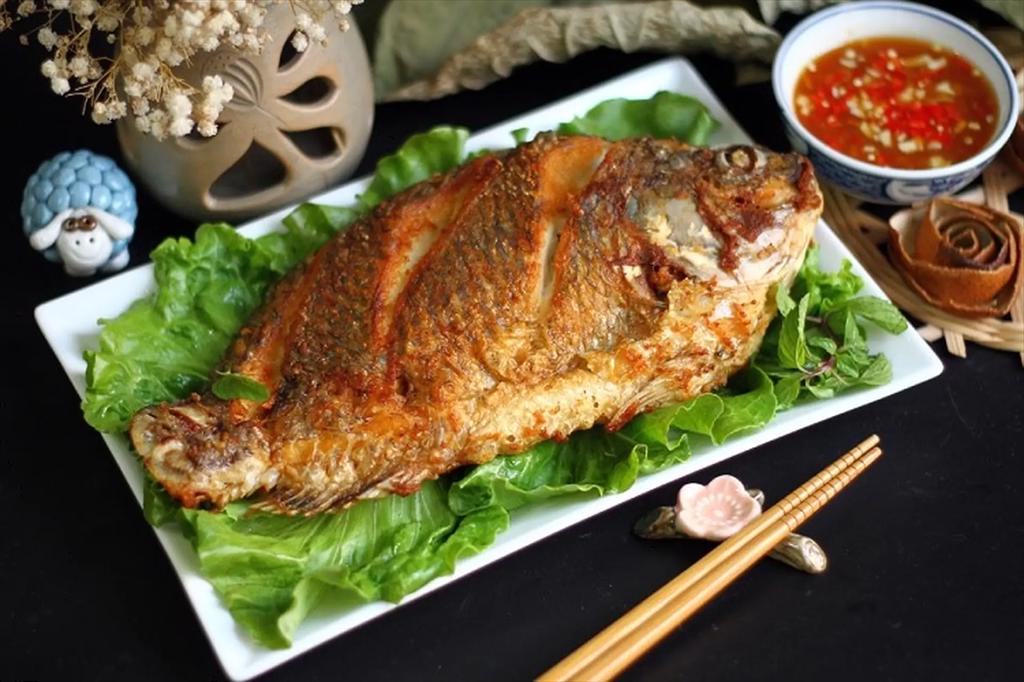
However, the current domestic production landscape reveals several structural weaknesses that have not kept pace with this growth momentum. Vietnam’s tilapia processing and export industry is facing a series of unresolved challenges, ranging from dependence on imported fingerlings and low farming productivity to concentrated export markets and intensifying competition. Without comprehensive solutions, the current growth momentum may prove difficult to sustain in the long term.
Still dependent on imported high-quality fingerlings
Vietnam remains heavily reliant on imported tilapia fingerlings, increasing production costs and reducing the industry’s self-sufficiency. At the same time, domestic broodstock quality has shown signs of deterioration, with slower growth performance becoming more evident.
Comprehensive investment in domestic breeding research and better credit support for farmers remain issues that have yet to be addressed systematically.
Growing competition from China
Last year, Chinese farmers reduced production due to losses caused by US tariff policies, creating opportunities for Vietnam. However, this year Chinese farmers have resumed expansion, increasing competitive pressure in the US market. Beyond its scale advantage, with annual production exceeding 3.3 million tons, China is also investing heavily in genetic technology to develop larger tilapia with thicker fillets aimed at premium market segments — a direction that Vietnam, with its still-limited breeding research capacity, is unlikely to match in the short term.
Dependence on a few key markets
Brazil and the US accounted for nearly 75% of Vietnam’s total tilapia export turnover in Q1/2026. In Brazil, import regulations vary across states, with some local authorities imposing technical barriers or local tariffs to protect domestic aquaculture industries. In the US, Vietnam’s current advantages partly stem from a specific tariff environment that could change if trade policies are adjusted. Meanwhile, the growing presence of Vietnamese tilapia in Mexico has already triggered reactions from local farmers — indicating similar risks could emerge in other markets once Vietnam’s market share becomes large enough.
Disease risks, technical barriers, and financing costs
Disease outbreaks remain a persistent risk as farming areas expand rapidly without fully coordinated zoning and management plans. The industry is also facing high interest rates and limited access to credit, affecting the ability of farmers and businesses to invest in better fingerlings and production expansion. On the market side, the EU and Japan are tightening requirements on antibiotic residues, food safety, and sustainability standards — barriers that require coordinated industry-wide investment rather than isolated efforts by individual companies alone.
(seafood.vasep.com.vn) Vietnam Clean Seafood Corporation has invested in a 280-hectare super-intensive shrimp farming zone in Tran De Commune, Can Tho City, generating export value of approximately VND 3 billion per hectare per year—around 50 times higher than traditional agricultural production.
(vasep.com.vn) Vietnam’s seafood exports reached USD 1.02 billion in May 2026, up 0.6% year-on-year. Cumulative exports in the first five months of 2026 totaled USD 4.67 billion, an increase of 11% compared to the same period in 2025.
(seafood.vasep.com.vn) In a rapidly changing global seafood market, timely insights and reliable data are more critical than ever. The Report on Vietnam Seafood Exports in Q1/2026 provides a comprehensive overview of the latest developments in Vietnam’s seafood production, trade performance, and export trends, helping businesses navigate uncertainty and identify new growth opportunities.
(seafood.vasep.com.vn) While many major markets continue to experience slow growth, Russia has emerged as a brighter destination for Vietnamese tuna exports in early 2026. Export turnover to this market increased by nearly 55% in the first four months of the year, indicating a clear improvement in demand. Nevertheless, Russia remains a market that should be viewed with both optimism and caution.
(seafood.vasep.com.vn) Vietnam’s pangasius exports have shown encouraging signs of recovery in 2026. In the first four months of the year, total export turnover reached USD 720 million, up 17% compared to the same period last year. This result reflects improving demand across many markets, as well as the efforts of Vietnamese pangasius enterprises to maintain production, secure orders, and adapt to changing market conditions.
(seafood.vasep.com.vn) In the first four months of 2026, Vietnam’s tilapia exports reached USD 49 million, up 151% compared to the same period in 2025. This impressive growth reflects positive momentum in the tilapia sector, with Brazil emerging as a key driver of growth, while frozen tilapia fillets continued to be the industry's leading export product.
(seafood.vasep.com.vn) Vietnam’s tuna exports to the UK have shown positive signs in the first months of 2026. While the UK’s overall tuna imports from the world declined, imports from Vietnam increased strongly, indicating that there is still room for Vietnam to expand its market share. However, behind this growth, competitive pressure remains intense, especially as the UK continues to be a major market for established suppliers such as Ecuador, Mauritius, and Ghana.
(seafood.vasep.com.vn) Biofloc technology is being piloted in several rice–shrimp farming models in Ca Mau Province, showing initial positive results in controlling pond environments, improving shrimp seed quality, and supporting sustainable aquaculture development.
(seafood.vasep.com.vn) In the first four months of 2026, Mexico, Brazil, and Colombia together contributed USD 108 million to Vietnam’s pangasius exports, accounting for around 15% of the industry’s total export turnover. Amid tightening global whitefish supply and slowing demand in several traditional markets, Latin America is increasingly becoming an important expansion destination for the sector.
(seafood.vasep.com.vn) Alongside the development of high-tech shrimp farming, Ha Tinh Province is accelerating the cultivation of high-value freshwater aquatic species, with red tilapia emerging as an effective and sustainable farming model.
VASEP - HIỆP HỘI CHẾ BIẾN VÀ XUẤT KHẨU THỦY SẢN VIỆT NAM
Chịu trách nhiệm: Ông Nguyễn Hoài Nam - Phó Tổng thư ký Hiệp hội
Đơn vị vận hành trang tin điện tử: Trung tâm VASEP.PRO
Trưởng Ban Biên tập: Bà Phùng Thị Kim Thu
Giấy phép hoạt động Trang thông tin điện tử tổng hợp số 138/GP-TTĐT, ngày 01/10/2013 của Bộ Thông tin và Truyền thông
Tel: (+84 24) 3.7715055 – (ext.203); email: kimthu@vasep.com.vn
Trụ sở: Số 7 đường Nguyễn Quý Cảnh, Phường An Phú, Quận 2, Tp.Hồ Chí Minh
Tel: (+84) 28.628.10430 - Fax: (+84) 28.628.10437 - Email: vasephcm@vasep.com.vn
VPĐD: số 10, Nguyễn Công Hoan, Ngọc Khánh, Ba Đình, Hà Nội
Tel: (+84 24) 3.7715055 - Fax: (+84 24) 37715084 - Email: vasephn@vasep.com.vn