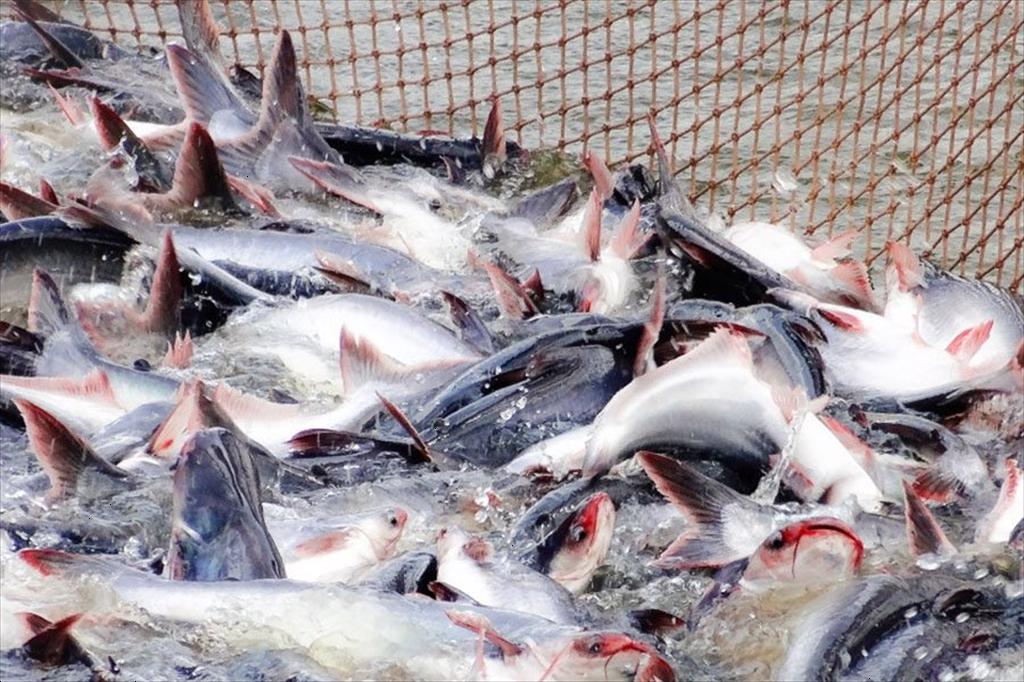
Since the beginning of the year, U.S. pangasius imports have remained subdued, with export value concentrated more heavily in January and April. The cautious sentiment among importers is believed to have been significantly influenced by changes in U.S. tariff policies. Amid continued uncertainty over costs and trade policies, importers have tended to limit large-volume commitments and wait for further information before adjusting their purchasing plans.
POR21 Reversal Adds Pressure on Exporters
The outlook for Vietnam’s pangasius exports to the U.S. became more challenging after the U.S. Department of Commerce (DOC) announced the final results of POR21, with significantly higher tariff rates imposed on several companies. Compared with the preliminary results, Bien Dong’s rate increased from US$0.29 to US$1.00/kg, NTSF’s from US$0.07 to US$0.38/kg, while the rates for CASEAMEX and NAVICO rose from US$0.23 to US$0.84/kg.
Companies that had their own separate rates from previous review periods will continue to be subject to their most recent individual rates. Meanwhile, companies that do not qualify for individual rates will face the country-wide rate of US$2.39/kg. The tariff increases raise costs and affect the competitiveness of Vietnamese pangasius in the U.S. market.
Thus, following the relatively favorable POR20 period, during which some companies received a zero-duty rate, POR21 represents a significant reversal and adds further pressure to pangasius exports to the U.S. Companies should exercise caution when determining cash deposit amounts for new shipments and directly cross-check their documentation with U.S. Customs and Border Protection (CBP) and the DOC.
However, opportunities remain in the U.S. market. Whitefish supplies are facing pressure as some fishing grounds have tightened catch quotas for cod and pollock, creating some room for farmed species such as pangasius. Nevertheless, the expansion of Alaska pollock quotas and increasingly visible competition from tilapia will add further pressure to demand for pangasius.
Market Diversification Can Reduce Dependence
The impact of POR21 on exports is not the same for all companies. Businesses with less dependence on the U.S. market, diversified export markets or a focus on niche markets will be better positioned to mitigate the impact of higher tariffs. In practice, some companies that are less focused on the U.S. market have proactively diversified their pangasius export destinations, thereby reducing dependence on a single market.
In this context, although POR21 presents a challenge for pangasius exports to the U.S., it also provides an incentive for companies to adjust their market strategies and expand into CPTPP markets, the EU, the Middle East, China and other potential destinations. Market diversification will help companies spread risks and become more proactive in responding to changes in trade policies.
Alongside market expansion, improving product quality and value will be a key factor in maintaining the competitiveness of Vietnamese pangasius. Companies should focus on quality, brand building, international certifications, traceability and, particularly, the development of value-added and deeply processed products rather than relying primarily on frozen fillets.
Better compliance with the requirements of individual markets, differentiation through quality and product diversification will enable Vietnamese pangasius to make better use of new market opportunities while strengthening its competitiveness in traditional markets.
POR21, therefore, is not merely a tariff challenge but also a test of the Vietnamese pangasius industry’s ability to adapt. The U.S. remains an important market with further potential, but the industry’s growth outlook should not depend on a single destination. In the long term, market diversification, higher product quality and the development of value-added products will provide the foundation for Vietnamese pangasius to sustain growth and strengthen its position in international markets.
(seafood.vasep.com.vn) In the first nine months of 2026, Vietnam’s tilapia exports to the EU reached more than USD 4 million, up 2% year on year. The EU accounted for 4% of total tilapia export value, ranking behind major markets such as Brazil, the United States, Saudi Arabia and the CPTPP bloc.
(seafood.vasep.com.vn) On October 31, 2026, in Hanoi, Sa Giang Import-Export Corporation, a member of the Vietnam Association of Seafood Exporters and Producers (VASEP), was awarded the Top 30 Outstanding Cultural and Reputable Enterprises of 2026 certificate by the Vietnam Chamber of Commerce and Industry (VCCI). This group represents the most distinguished companies among the 100 enterprises honored at the “Cultural and Reputable Enterprises 2026” announcement ceremony.
(vasep.com.vn) In the first nine months of 2026, Vietnam’s pangasius exports to the EU reached approximately $148 million, up 12% compared to the same period in 2025. In September 2026 alone, export turnover to this market hit $18 million, a 27% year-on-year increase. Despite diverging demand across member states, the EU remains a market with growth potential for Vietnamese pangasius, particularly as supplies of several traditional whitefish species face mounting pressure.
(seafood.vasep.com.vn) Vietnam’s tuna exports to the US are showing a clear recovery after a difficult start to the year. However, the rebound is taking place against a backdrop of declining US tuna imports and a shifting supply structure, posing new challenges for Vietnamese businesses.
(vasep.com.vn) In the first nine months of 2026, Vietnam’s shrimp exports to Japan reached US$440.9 million, up 6.4% year on year. This result is noteworthy as Japan’s total shrimp imports continued to decline slightly and competition among suppliers intensified. Demand for convenience foods and processed products continues to create opportunities for Vietnamese exporters, but capitalizing on these opportunities requires stronger competitiveness and the ability to meet increasingly specific market requirements.
(vasep.com.vn) After slowing in the first months of the year, Vietnam’s tuna exports have shown a clear improvement since June 2026. However, behind September’s double-digit growth lies a notable reality: export value is recovering, but pressures from markets, trade policies, and competition among suppliers remain.
(vasep.com.vn) Vietnam’s pangasius export value reached US$1.7 billion in the first nine months of 2026, up 11% year on year. In September alone, exports totaled US$210 million, an increase of 16%. China, the United States, and Brazil were the three largest markets, accounting for 49% of total export value. While China and Brazil maintained their growth momentum, exports to the US remained below the level recorded in the same period last year.
(vasep.com.vn) On November 11, 2026, in Can Tho, the Vietnam Association of Seafood Exporters and Producers (VASEP) will organize the Vietnam Seafood Summit 2026 (VSS 2026) under the theme “Seafood Market Outlook 2027–2029: Opportunities and Headroom for Double-Digit Export Growth.”
(seafood.vasep.com.vn) Business leader Do Ngoc Tai, General Director of Tai Kim Anh Seafood Processing Joint Stock Company, was honored by the Vietnam Chamber of Commerce and Industry (VCCI) with the title “Outstanding Vietnamese Entrepreneur – Thanh Giong Cup 2026” at a ceremony celebrating Vietnam Entrepreneurs’ Day (October 13). The event took place on the evening of October 11, 2026, at the National Convention Center in Hanoi.
(vasep.com.vn) The global tilapia market is becoming increasingly segmented, not only among producing countries but also by product type and destination market. Supply is divided into groups with distinct competitive advantages: large volumes of whole fish and frozen fillets from Asia, high-value fresh fillets from Latin America, and substantial domestic consumption in several major producing countries.
VASEP - HIỆP HỘI CHẾ BIẾN VÀ XUẤT KHẨU THỦY SẢN VIỆT NAM
Chịu trách nhiệm: Ông Nguyễn Hoài Nam - Phó Tổng thư ký Hiệp hội
Đơn vị vận hành trang tin điện tử: Trung tâm VASEP.PRO
Trưởng Ban Biên tập: Bà Phùng Thị Kim Thu
Giấy phép hoạt động Trang thông tin điện tử tổng hợp số 138/GP-TTĐT, ngày 01/10/2013 của Bộ Thông tin và Truyền thông
Tel: (+84 24) 3.7715055 – (ext.203); email: kimthu@vasep.com.vn
Trụ sở: Số 7 đường Nguyễn Quý Cảnh, Phường An Phú, Quận 2, Tp.Hồ Chí Minh
Tel: (+84) 28.628.10430 - Fax: (+84) 28.628.10437 - Email: vasephcm@vasep.com.vn
VPĐD: số 10, Nguyễn Công Hoan, Ngọc Khánh, Ba Đình, Hà Nội
Tel: (+84 24) 3.7715055 - Fax: (+84 24) 37715084 - Email: vasephn@vasep.com.vn