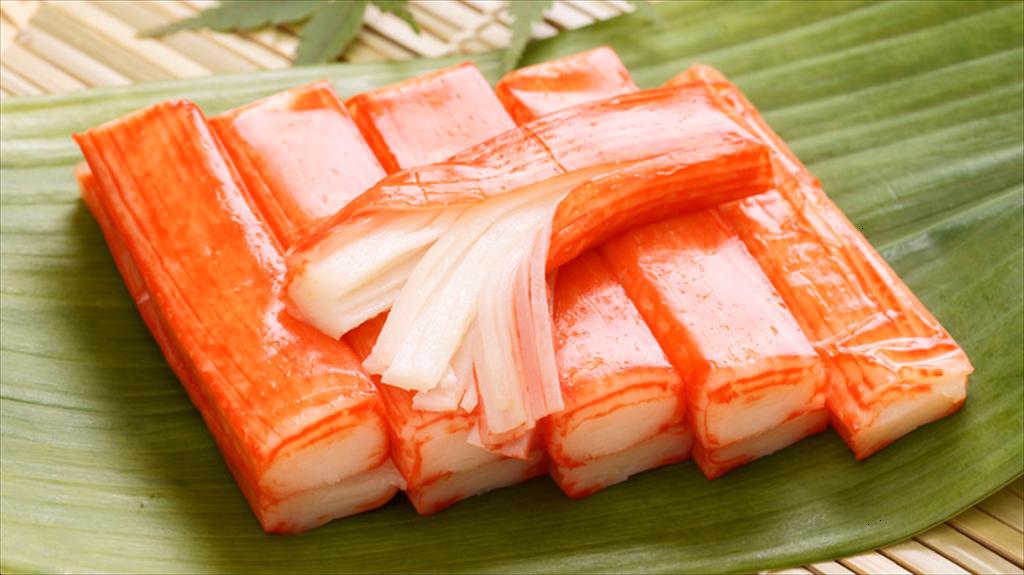
However, unlike many fresh seafood products that depend heavily on cold chains and rapid transportation, surimi products benefit from longer shelf life, reasonable costs, and convenience, enabling this segment to maintain stable growth over the past several years.
Surimi – A Processed Food Segment with Stable Growth
According to seafood market reports from FAO Globefish and various food industry research organizations, global surimi production currently ranges between 850,000 and 1 million tons per year. The main production centers are located in the Asia–Pacific region.
Raw materials for the surimi industry mainly come from two groups of fish:
The United States and Russia currently supply the majority of Alaska pollock–based surimi to the global market, while Southeast Asian countries play a crucial role in producing surimi from tropical marine fish.
Japan is considered the pioneer of the modern surimi industry, but in recent decades the global production center has shifted significantly toward Southeast Asia.
Southeast Asia – The World’s Surimi Production Hub
Within the current global surimi supply chain, countries such as Thailand, Vietnam, China, and India are playing increasingly important roles. Thailand has long been a major surimi processing hub in the region, thanks to its developed seafood processing industry and favorable logistics system.
Meanwhile, Vietnam is emerging as a notable surimi supplier, particularly for frozen fish cake products exported to Asian markets. According to data from Vietnam Customs, Vietnam’s exports of fish cakes and surimi in January 2026 reached approximately USD 32 million, up 20% compared to the same period in 2025.
In terms of market structure, South Korea remained the largest importer, with export value reaching about USD 8.4 million, accounting for over 26% of total exports of this product group. Thailand ranked second with around USD 7.3 million, representing nearly 23%.
Notably, exports to China reached nearly USD 5 million, increasing by more than 100% year-on-year, reflecting rising demand for surimi products in this market.
Other markets such as Japan, Malaysia, and Taiwan also recorded positive growth. In particular, exports to Taiwan increased more than fivefold compared with the same period last year, indicating expanding surimi consumption in the East Asian region.
At the regional level, ASEAN currently accounts for more than 32% of Vietnam’s total fish cake and surimi export value, while the CPTPP bloc accounts for nearly 19%, highlighting the role of free trade agreements in promoting exports of this product group.
Impact of Middle East Conflict on the Surimi Market
Tensions in the Middle East may affect the surimi industry in several ways, primarily through rising logistics and energy costs. The region lies along major maritime routes connecting Asia with Europe and Africa. As maritime security risks increase, shipping insurance and container freight rates often rise accordingly.
If shipping routes through the Middle East are disrupted or forced to reroute, transportation time for goods from Asia to Europe may be extended, leading to higher logistics costs for frozen seafood products, including surimi.
In addition, geopolitical tensions often trigger oil price fluctuations, increasing fuel costs for both seafood harvesting and maritime transport. This could raise production costs for surimi, particularly for factories relying on offshore-caught fish supplies.
Increasing International Competition in the Surimi Industry
The global surimi market is witnessing intensifying competition among producers. Thailand and China are investing heavily in processing technologies and diversifying surimi products to meet demand in the processed food market.
Meanwhile, the United States continues to play an important role thanks to its supply of surimi made from Alaska pollock, a raw material widely recognized for its high quality.
At the same time, the global food industry is seeing the emergence of plant-based seafood alternatives. However, in the short term, traditional surimi products still maintain advantages in price and established consumption habits, especially in many Asian markets.
Outlook for the Fish Cake – Surimi Market
As global demand for processed and convenient foods continues to grow, the fish cake and surimi market is expected to maintain steady growth in the coming years.
For Vietnam, with advantages in tropical marine fish resources and processing capacity, the fish cake and surimi sector is considered one of the segments with strong growth potential.
If businesses effectively leverage free trade agreements and expand export markets, surimi products could continue to make a significant contribution to Vietnam’s seafood export value in the coming years.
(seafood.vasep.com.vn) With continued policy support, technological innovation and close coordination among authorities, businesses and farmers, Vietnam’s pangasius industry is expected to make a strong and sustainable breakthrough during the 2026–2030 period, reinforcing its position as the world’s leading exporter of the fish.
(seafood.vasep.com.vn) During the first four months of 2026, Vietnam’s tilapia exports to Asian markets showed varying trends across regions and countries. The Middle East recorded strong growth, with Saudi Arabia emerging as the largest Asian market for Vietnamese tilapia. ASEAN markets also expanded significantly, driven primarily by Malaysia. Meanwhile, Japan maintained solid growth, while exports to South Korea declined compared to the same period in 2025.
(seafood.vasep.com.vn) Shrimp and pangasius continued to lead growth, helping seafood exports reach $4.67 billion in the first five months of the year; however, differentiation among product groups and increasingly stringent requirements from importing markets are posing many challenges for the industry.
(seafood.vasep.com.vn) Every day, the seafood processing industry in Ca Mau generates large quantities of shrimp heads and shells during processing operations. In the past, these by-products were largely treated as waste, increasing production costs and posing potential environmental risks. However, thanks to advanced processing technologies, materials once considered waste are now being transformed into high-value products, creating a circular economy model within the seafood industry.
(seafood.vasep.com.vn) Vietnam Clean Seafood Corporation has invested in a 280-hectare super-intensive shrimp farming zone in Tran De Commune, Can Tho City, generating export value of approximately VND 3 billion per hectare per year—around 50 times higher than traditional agricultural production.
(vasep.com.vn) Vietnam’s seafood exports reached USD 1.02 billion in May 2026, up 0.6% year-on-year. Cumulative exports in the first five months of 2026 totaled USD 4.67 billion, an increase of 11% compared to the same period in 2025.
(seafood.vasep.com.vn) In a rapidly changing global seafood market, timely insights and reliable data are more critical than ever. The Report on Vietnam Seafood Exports in Q1/2026 provides a comprehensive overview of the latest developments in Vietnam’s seafood production, trade performance, and export trends, helping businesses navigate uncertainty and identify new growth opportunities.
(seafood.vasep.com.vn) While many major markets continue to experience slow growth, Russia has emerged as a brighter destination for Vietnamese tuna exports in early 2026. Export turnover to this market increased by nearly 55% in the first four months of the year, indicating a clear improvement in demand. Nevertheless, Russia remains a market that should be viewed with both optimism and caution.
(seafood.vasep.com.vn) Vietnam’s pangasius exports have shown encouraging signs of recovery in 2026. In the first four months of the year, total export turnover reached USD 720 million, up 17% compared to the same period last year. This result reflects improving demand across many markets, as well as the efforts of Vietnamese pangasius enterprises to maintain production, secure orders, and adapt to changing market conditions.
(seafood.vasep.com.vn) In the first four months of 2026, Vietnam’s tilapia exports reached USD 49 million, up 151% compared to the same period in 2025. This impressive growth reflects positive momentum in the tilapia sector, with Brazil emerging as a key driver of growth, while frozen tilapia fillets continued to be the industry's leading export product.
VASEP - HIỆP HỘI CHẾ BIẾN VÀ XUẤT KHẨU THỦY SẢN VIỆT NAM
Chịu trách nhiệm: Ông Nguyễn Hoài Nam - Phó Tổng thư ký Hiệp hội
Đơn vị vận hành trang tin điện tử: Trung tâm VASEP.PRO
Trưởng Ban Biên tập: Bà Phùng Thị Kim Thu
Giấy phép hoạt động Trang thông tin điện tử tổng hợp số 138/GP-TTĐT, ngày 01/10/2013 của Bộ Thông tin và Truyền thông
Tel: (+84 24) 3.7715055 – (ext.203); email: kimthu@vasep.com.vn
Trụ sở: Số 7 đường Nguyễn Quý Cảnh, Phường An Phú, Quận 2, Tp.Hồ Chí Minh
Tel: (+84) 28.628.10430 - Fax: (+84) 28.628.10437 - Email: vasephcm@vasep.com.vn
VPĐD: số 10, Nguyễn Công Hoan, Ngọc Khánh, Ba Đình, Hà Nội
Tel: (+84 24) 3.7715055 - Fax: (+84 24) 37715084 - Email: vasephn@vasep.com.vn