Growth amidst challenges
According to the Vietnam Seafood Exporters Association, in the first six months of 2026, seafood export turnover reached US$5.7 billion, an increase of 11.4% compared to the same period last year. In terms of product groups, seafood was one of the three groups with a trade surplus in the first six months of 2026, reaching US$4.13 billion, an increase of 17%.
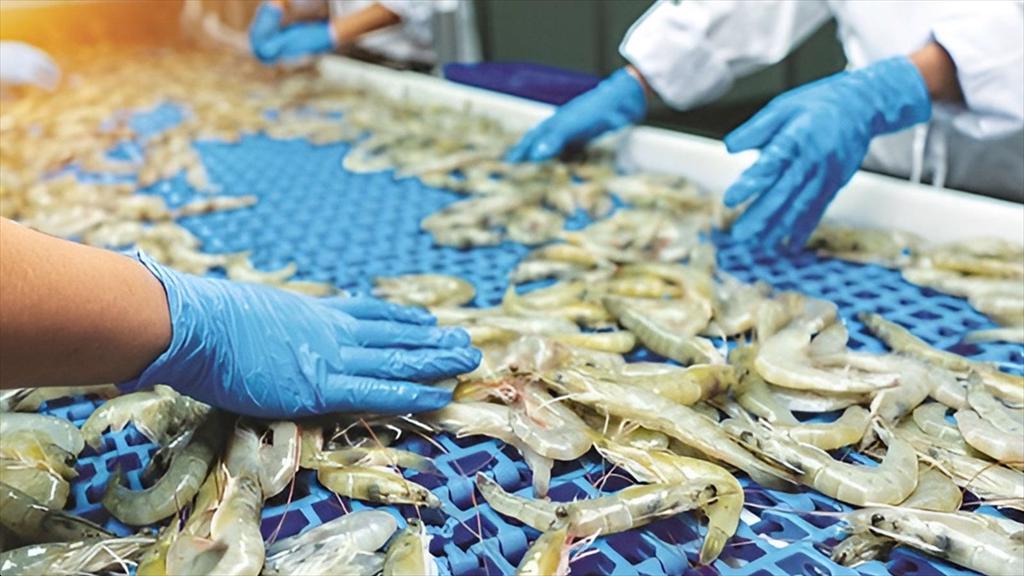
In the first six months of 2026, seafood export turnover reached US$5.7 billion, an increase of 11.4% compared to the same period last year.
Commenting on the six-month outlook, Mr. Nguyen Hoai Nam, General Secretary of the Vietnam Association of Seafood Processing and Export (VASEP), said that export results reflected the great efforts of the business community in maintaining production, adapting to market fluctuations, and effectively exploiting export opportunities.
In particular, bilateral and multilateral free trade agreements (FTAs) have brought many advantages to the fisheries sector, and businesses have effectively utilized the commitments of integration.
Notably, thanks to the effective utilization of the Vietnam-European Union Free Trade Agreement (EVFTA), seafood exports to the EU have remained in the "billion-dollar club," averaging $1.1-1.3 billion per year.
The above results are seen as a positive foundation for achieving double-digit growth in seafood exports in 2026. However, the Vietnamese seafood industry is facing numerous challenges as major export markets are increasing trade protectionist measures.
For example, in the US market, in addition to trade protection measures such as anti-dumping and anti-subsidy measures for shrimp, new regulations and laws have emerged that tend to restrict imports and relate to labor standards.
Many other markets are also strengthening technical barriers. In particular, in Brazil , Vietnam's tilapia exports are experiencing positive growth thanks to the product's advantages and differentiation from many competitors. This shows that businesses need to continue proactively adapting to new market requirements to maintain export growth momentum.
According to Mr. Nguyen Hoai Nam, besides market risks, global container shipping rates are emerging as a major challenge for seafood exports in the second half of the year, especially as international container rates are approaching their highest level in almost two years.
These bottlenecks need to be removed.
According to VASEP, Vietnamese seafood businesses are facing numerous difficulties. Firstly, there is a serious labor shortage, especially in businesses in the Mekong Delta and Ho Chi Minh City. Without sufficient manpower, businesses find it very difficult to fulfill large orders.
Secondly, access to capital is difficult. In a context where businesses need to increase raw material procurement to fulfill orders, access to credit is limited, directly impacting their ability to expand production and exports.
Thirdly, high input costs. These three factors have formed a "three-pronged attack" that reduces the effectiveness of growth efforts for most seafood businesses.
For businesses involved in the harvesting and processing of seafood, difficulties also arise from the increasingly stringent requirements of import markets. The European Union (EU) continues to maintain its IUU (Illegal, Unreported, and Unregulated) fishing "yellow card" warning, and the United States applies numerous regulations related to marine animal protection and strict traceability requirements.
Notably, following the decentralization of management, the issuance of certificates and documents for export purposes in some localities still faces many obstacles. Numerous shipments are delayed in receiving documentation or have not completed the necessary confirmations within the deadline, preventing businesses from completing the paperwork to deliver goods to international partners, even after purchasing raw materials.
This is an issue that needs to be resolved promptly with the coordination of management agencies in the fields of agriculture , environment, and local authorities to avoid disrupting the export activities of businesses.
Mr. Nguyen Hoai Nam stated that the Association has submitted a detailed written proposal to the Ministry of Finance, the Ministry of Industry and Trade, and the Ministry of Agriculture and Environment. This includes 10 groups of recommendations, primarily focusing on reviewing and adjusting administrative regulations that businesses believe still act as barriers to production and business activities. VASEP hopes that the management agencies will continue to remove obstacles and create conditions to enhance the competitiveness of seafood businesses.
To achieve double-digit growth targets by 2026, VASEP has proactively supported businesses, focusing on strengthening market connections in key export regions. Currently, VASEP is actively preparing for the International Seafood Fair to be held in Ho Chi Minh City in August. It is expected that this trade promotion activity will expand connections, increase market share, and create more opportunities for seafood businesses.
(seafood.vasep.com.vn) The application of high technology in shrimp farming is delivering positive results in the coastal areas of Vinh Long Province, contributing to improved production efficiency and creating significant potential for further industry expansion. However, to fully capitalize on this potential, the province is focusing on aquaculture zoning, infrastructure investment, and promoting modern, sustainable production.
(seafood.vasep.com.vn) Đồng Tháp Province has intensified efforts to curb illegal fishing by strengthening vessel monitoring, law enforcement and seafood traceability.
(seafood.vasep.com.vn) Seafood businesses need solutions to overcome bottlenecks such as labor shortages, difficulty accessing capital, high input costs, and administrative procedures in order to maintain production, adapt to market fluctuations, and effectively exploit export opportunities.
(seafood.vasep.com.vn) The FTA would widen access to markets with strong demand for premium food products in line with the country’s strategy of shifting exports towards increasing added value.
(seafood.vasep.com.vn) On the morning of July 13th, Mr. Ho Quoc Dung, Member of the Central Committee of the Communist Party of Vietnam and Deputy Prime Minister, along with his delegation, visited and worked with businesses in An Giang province to promptly resolve obstacles and promote production and business activities.
(seafood.vasep.com.vn) As importing markets increasingly focus on biosecurity and traceability, Vietnam has established a relatively comprehensive legal framework and disease management system for aquaculture, covering tilapia farming as well as other cultured species. This system is based on the Law on Animal Health, regulations on the prevention and control of aquatic animal diseases, the National Plan for the Prevention and Control of Major Diseases in Farmed Aquatic Species, and environmental monitoring and early warning programs for aquaculture areas.
(seafood.vasep.com.vn) On July 9, 2026, the Embassy of Vietnam in Brazil organized the seminar titled “Sharing Information on Vietnam-Brazil Economic, Trade and Investment Relations in the First Half of 2026” to provide updates on bilateral cooperation and strengthen connections among government agencies, industry associations, and business communities of the two countries.
(seafood.vasep.com.vn) Seafood exports in the first 6 months of the year continued to be a bright spot with a total turnover of 5.7 billion USD, an increase of 11.4% compared to the same period last year. By commodity group, seafood is one of the three groups with a trade balance in the first 6 months of 2026 in a surplus state with 4.13 billion USD, an increase of 17%.
(seafood.vasep.com.vn) For many years, Vietnam’s seafood industry has been recognized as one of the country’s key export pillars. Products such as shrimp, pangasius, tuna, squid, octopus, and a wide range of other seafood have reached hundreds of markets worldwide. Yet behind these impressive export figures lies a significant challenge: a substantial share of Vietnam’s seafood export value still comes from minimally processed products, contract manufacturing, and raw material exports—segments characterized by low profit margins and high vulnerability to fluctuations in global prices.
(seafood.vasep.com.vn) In the context of a global economy shifting powerfully toward green and sustainable values, Vietfish 2026 is far more than just a commercial trade fair. It has become a strategic rendezvous and a "comprehensive ecosystem"—a convergence of value, knowledge, and sustainable growth opportunities for the entire industry chain.
VASEP - HIỆP HỘI CHẾ BIẾN VÀ XUẤT KHẨU THỦY SẢN VIỆT NAM
Chịu trách nhiệm: Ông Nguyễn Hoài Nam - Phó Tổng thư ký Hiệp hội
Đơn vị vận hành trang tin điện tử: Trung tâm VASEP.PRO
Trưởng Ban Biên tập: Bà Phùng Thị Kim Thu
Giấy phép hoạt động Trang thông tin điện tử tổng hợp số 138/GP-TTĐT, ngày 01/10/2013 của Bộ Thông tin và Truyền thông
Tel: (+84 24) 3.7715055 – (ext.203); email: kimthu@vasep.com.vn
Trụ sở: Số 7 đường Nguyễn Quý Cảnh, Phường An Phú, Quận 2, Tp.Hồ Chí Minh
Tel: (+84) 28.628.10430 - Fax: (+84) 28.628.10437 - Email: vasephcm@vasep.com.vn
VPĐD: số 10, Nguyễn Công Hoan, Ngọc Khánh, Ba Đình, Hà Nội
Tel: (+84 24) 3.7715055 - Fax: (+84 24) 37715084 - Email: vasephn@vasep.com.vn